Author: Meg Costa

Profiles in Impact: Using Data to Address the Root Causes of Crime and Advocate for Policy Change

At United Way of Metropolitan Dallas, data drives our every decision.  

We leverage micro-level, hyper-local data to identify the areas of greatest need and opportunity across our community. Data informs our targeted interventions that enable us to change lives by improving access to education, income and health for 1.7 million North Texans every year.  

Through programs like the Data Capacity Building Initiative (DCBI), we also share the power of local data with our community impact partners and accelerate progress toward our community-wide Aspire United 2030 goals. The DCBI leverages the Community Vulnerability Compass—a tool developed by our third-party evaluation partner, the Parkland Center for Clinical Innovation— to enable users to visualize and understand the complexities of social barriers to health, access and well-being in North Texas communities.  

The DCBI is helping nonprofits like Lone Star Justice Alliance tell their data story for policy change and community impact.  

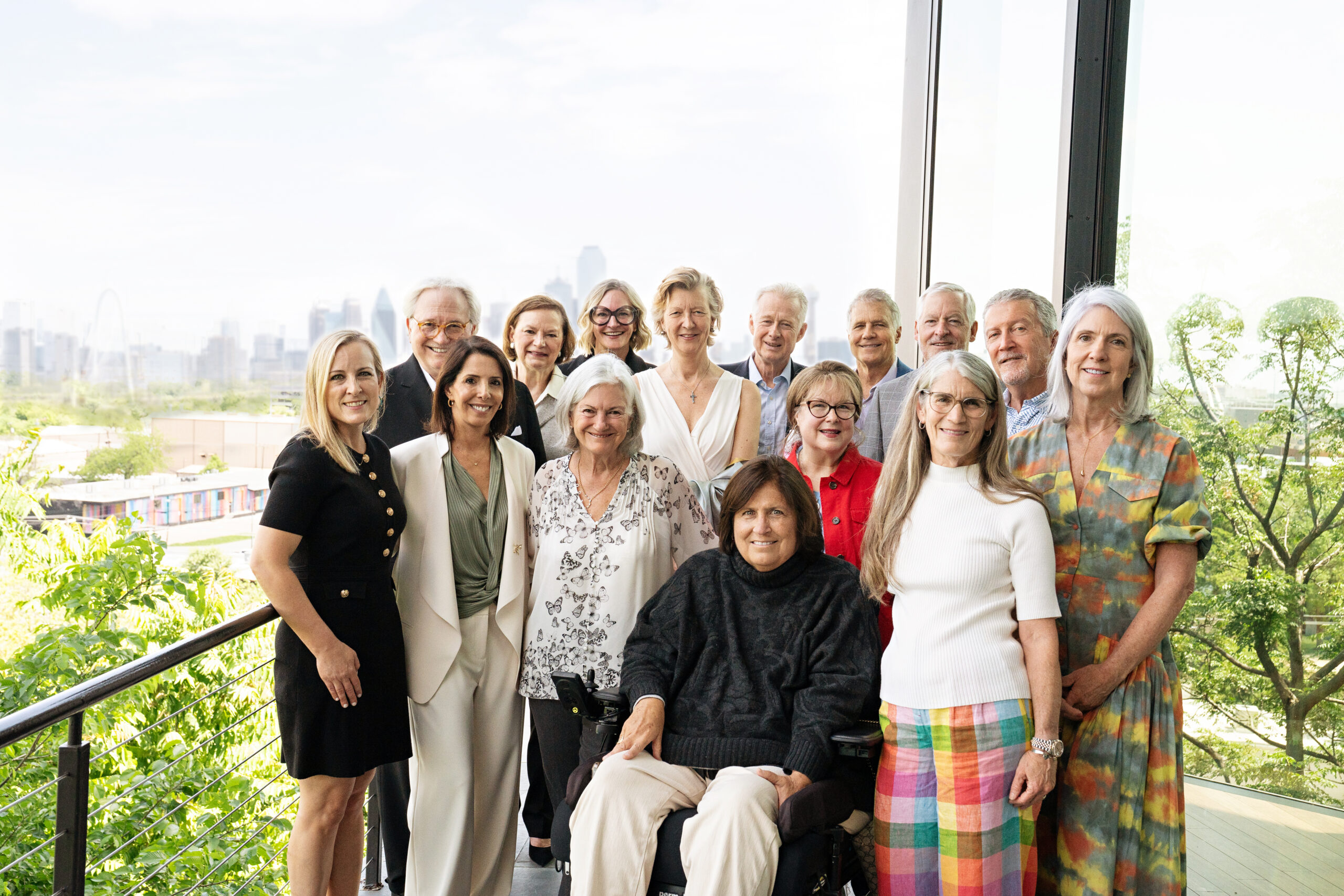
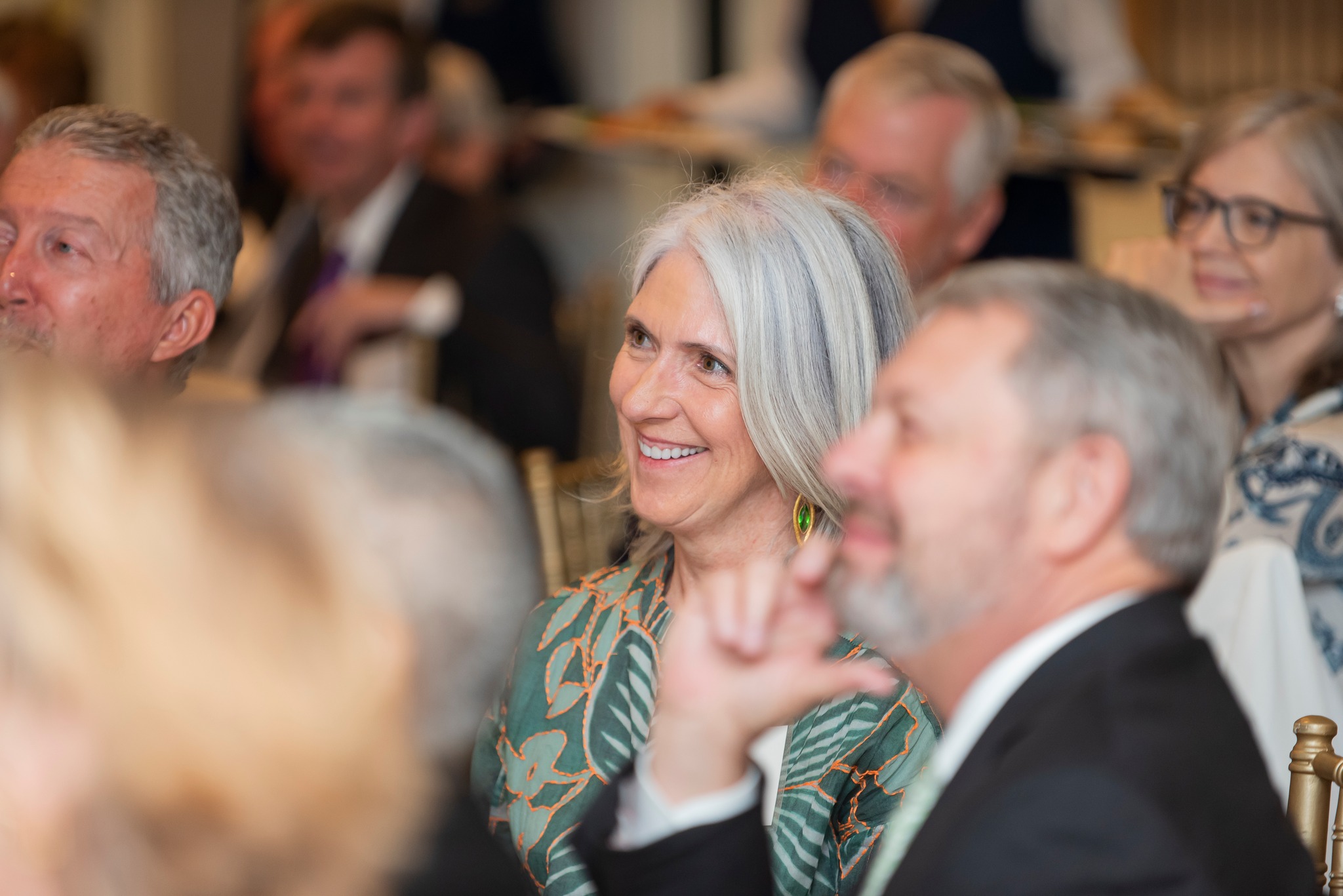
To share the power and potential of the Community Vulnerability Compass, United Way of Metropolitan Dallas hosted our first-ever DCBI funders presentation this summer, featuring the inaugural DCBI 12-member cohort. These community-based nonprofits are using data to drive measurable impact in North Texas. During this funders presentation, Elizabeth Henneke, founder and CEO of Lone Star Justice Alliance, discussed the importance of data to understand and address the root causes of community challenges and influence policymaking.  

Below are highlights from Elizabeth’s presentation as it relates to using data-informed decision-making to drive policy change.  

Partnering with United Way to Redefine Justice Involvement 

In the early years of Lone Star Justice Alliance, the organization launched pilot community-based programs in partnership with United Way. They focused on driving change by addressing the root causes of justice involvement.  

At the DCBI funders event, Elizabeth asked the audience to close their eyes and imagine investing $5 billion dollars in a company that fails 75% of the time and punishes instead of heals.  

“[Y]ou wouldn’t invest $5 billion in a company that failed 75% of the time. Yet you all do,” she said. “Because in Texas every year, we invest $5 billion in a justice system that punishes instead of heals. It doesn’t address the Aspire United 2030 goals. And instead, it takes us further from the goalpost that all of us are here to achieve.” 

As a member of the first DCBI cohort, Lone Star Justice Alliance has accelerated progress toward its goal of preventing justice involvement for young North Texans.  

Using CVC Data to Advance Policy at the State Capitol   

During the 89th Texas legislative session, Lone Star Justice Alliance used data from the Community Vulnerability Compass to influence policy change. Elizabeth shared how she and her colleagues used the Community Vulnerability Compass to drill down to district-level data to make arguments that were customized to the legislators in the capitol, revealing to lawmakers what’s going on in their community.    

Backed by this valuable local data, Elizabeth and her team achieved significant advocacy wins: They reduced by 40% the number of children going to adult court in the state of Texas; prevented survivors of crime, especially children who are sex trafficked, from being convicted of the crimes of their abusers; and established an affirmative defense for people who have been victims to not be charged for the crimes of their abusers.  

Using Data to Change Lives 

Elizabeth then shared the client story of Jaquan, who became involved in the juvenile justice system. She described how Lone Star Justice Alliance used Community Vulnerability Compass data to show how social determinants of health, such as a lack of transportation, can put young people on the path to justice involvement. 

“We then took the Community Vulnerability Compass information with him to court, and we were able to show his probation officer that his failure to be able to get to work on time was due to the lack of transportation in his area and not because our client had some sort of deficit,” she explained. “Through conversations like that, we’re changing the way people think about Jaquan and others.” 

As a result of Lone Star Justice Alliance’s representation, Jaquan was able to get his driver’s license and access job readiness training, which enabled him to complete occupational training as an electrician. He’s now earning $22 an hour in his apprenticeship position—an inspiring testament to the power of data for creating meaningful change in people’s lives.  

Learn More About the DCBI 

Click here to learn more about how the DCBI Second Century Project is equipping nonprofits with an innovative Community Vulnerability Compass tool to capture hyper-local data to pinpoint areas of greatest need, and fine-tune initiatives to better address social barriers to education, income and health.  

Invest in Our Data-Driven Community Impact Work   

As United Way enters its second century, the path forward is clear: We must continue building strong partnerships and leveraging innovative tools to create lasting, transformational change in North Texas.    

We invite you to join the forward-thinking organizations that have invested in our Century Project, the Data Capacity Building Initiative. Together, we can expand our proven, data-driven community impact strategy and our use of local data to develop collective solutions for our community.    

Click here to invest today. For more information, contact Susan Hoff at shoff@unitedwaydallas.org. 

Toyota DRIVE Program Empowers Educators and Benefits Students in West Dallas

Education may be one of the few occupations in which employees regularly have to buy their own supplies in order to succeed.  

In a single year, teachers across the country spend an average of $610 on school supplies for their students—things like pencils, notebooks, lab materials, and even food and hygiene items.  

In under-resourced communities like West Dallas, it can be especially challenging for teachers to meet students’ needs, simply because schools tend to have fewer funds and many families have limited incomes.  

That’s why United Way of Metropolitan Dallas has partnered with Toyota Motor North America to help teachers better serve their students. Through the DRIVE program, last year United Way and Toyota awarded more than $120,000 in grants to local educators to support special projects, big ideas and everyday needs. The initiative is driving progress toward our Aspire United 2030 goals, which include improving access to education for local students. 

Read on to learn more about the DRIVE partnership and how change-seekers like you can create opportunity for local students to thrive.  

Empowering Local Teachers and Students 

We know that students learn best in environments where they feel safe, inspired and free to explore. Achieving that ideal requires ensuring that educators have the resources they need to help children thrive in the classroom—and beyond. 

That’s why United Way of Metropolitan Dallas partnered with Toyota Motor North America to create the Driving Resilience, Inclusion, Value and Enrichment (DRIVE) grant program, one part of Toyota’s commitment to expanding access to opportunities that strengthen North Texas. The program provides grant funding to local educators, with a goal of benefiting children ranging from pre-kindergarten to 12th grade. 

In North Texas, the DRIVE program is open to educators in 10 West Dallas schools identified as underfunded and that are part of the Pinkston feeder pattern. Nearly anyone involved in education can apply—including teachers, librarians, principals, assistant principals and counselors, as well as music, art and theater instructors.  

Grant requests can be for as little as $500 and up to $3,000 and can cover nearly any specific need. In previous years, DRIVE has awarded funding for projects that include classroom and building beautification and updates; technology upgrades to improve efficiencies, access and learning opportunities; professional development to enhance teachers’ impact on student learning; curriculum and innovative initiatives that drive and support learning outcomes; and experiential opportunities for students, such as field trips. 

We worked with Toyota to launch DRIVE during the 2019-2020 school year, and the program has continued to expand every year, thanks to Toyota’s generous support. Last school year, the program distributed more than $120,000 to enable educators to better serve their students.  

“Without the support of Toyota, United Way would not be able to drive this level of impact in our communities,” says Daniel Bouton, vice president of health and wellness at United Way of Metropolitan Dallas. “Through our collaboration, United Way of Metropolitan Dallas and Toyota are expanding opportunities for West Dallas students by combining our expertise and resources to enhance the learning experience. Together, we’re not only supporting academic achievement, we’re also equipping teachers with the tools they need to help every student thrive.”

Expanding Educational Horizons 

The funds from DRIVE grants enable educators to engage students in school in new and exciting ways—which isn’t always possible given the limited funds at many schools.  

Since the program launched in 2019, $380,000 has been distributed to 171 educators, positively impacting an estimated 14,000 students across West Dallas. Because of the interest shown by educators and the amount of money needed to achieve the goals of specific projects that the school district can’t fund on its own, the total amount of funds distributed has grown over the years. Two years ago, DRIVE resulted in $78,000 in grant awards, and last year the total was more than $124,000. 

The program has been such a success in North Texas that last year Toyota decided to work with United Way of Metropolitan Dallas to launch DRIVE in eight schools in Huntsville, Ala., as part of the larger Driving Possibilities Initiative, which Toyota announced in 2023. The initiative funded 64 projects for a total of $131,000, and more than 3,400 students participated in a project funded by DRIVE. 

One example of what DRIVE has made possible is a program proposed by Magella Knight, a teacher at Dr. Elba and Domingo Garcia-West Dallas STEM School. Magella told The Dallas Morning News that she wanted to start a robotics club for kindergarten through third-grade students to expose them to science, technology, engineering and mathematics (STEM) from a young age.  

“The school funds are limited, and I want to do robotics,” she told The Dallas Morning News. “So, after they told me I could apply, I decided to apply for the whole amount.”  

Magella received a $3,000 grant to kick off her STEM program. 

“Robotics is a really good program for them to come [to] after school and [it gives them] experience so that they can go into those [STEM] jobs,” she said. “I think it’s really, really necessary here, and we just don’t have the money. Toyota has done a whole lot. They provide school supplies for the kids and backpacks, so I’m not surprised that they’re giving something like [these grants], because they see that we have that need. They do a lot of stuff for the communities.” 

Are You a West Dallas Educator? Apply for a DRIVE Grant! 

Applications for 2025-2026 DRIVE grants are open now through September 5.  

To participate in the process, educators must work at one of 10 West Dallas schools identified as underfunded in several categories in the Pinkston feeder pattern. Based on supply costs to support the programs they pitched, applicants can request any amount between $500 and $3,000 to fulfill various initiatives. 

We are encouraging and promoting projects that:  

  • Demonstrate a direct impact on academic achievements, including areas of STEM   
  • Enhance learning opportunities and student experiences, including career exploration 
  • Support social and emotional learning through room beautification efforts  

This year, United Way and Toyota are expanding our support by adding an incentive to recognize the schools with the highest number of applications submitted. The school that submits the most applications will receive a $3,000 bonus, and the second-place school will receive $1,500. Awards must be used for teacher appreciation projects or activities that impact all staff. Funds will be awarded directly to the school’s principal, and all funds must be utilized during the current school year. 

To start your application, visit our Toyota DRIVE webpage.  (Are you an educator in the Huntsville, Ala., area? Click here to apply.) 

The Live United Movement Is Creating Brighter Futures—One School at a Time

As teachers and students across North Texas prepare to head back to the classroom, United Way of Metropolitan Dallas and our supporters recently came together for Stock the School, a highly impactful volunteer program that helps create a strong foundation for student and teacher success. The event directly supports our mission to improve access to education, income and health by ensuring every student has what they need to succeed. 

On Friday, August 1, more than 150 volunteers from across North Texas gathered to make a meaningful impact during Stock the School—which was powered by generous support from Bank of America, Contran, Mr. Cooper Group, Toyota and Vistra. These dedicated change-makers delivered essential classroom supplies, revamped learning environments and provided much-needed support to teachers and students alike. 

Stock the School is part of our Aspire United Volunteer Series presented by Texas Instruments, which is a key part of our year-long Centennial anniversary celebration presented by PepsiCo. Each summer, Stock the School unites the community to ensure our North Texas students and teachers walk into the classroom confident, empowered and prepared. The initiative directly supports our community-wide Aspire Unite 2030 goals, which are our North Star for driving progress through the year 2030. As part of those goals, we’re working to ensure every North Texas student graduates high school prepared for success in college or a career. 

Read on to learn more about Stock the School and how you can support student success right here in North Texas. 

Investing in Education and Empowering Our Future 

From organizing classrooms and refreshing décor to remodeling teacher workspaces and installing new equipment, each Stock the School project is thoughtfully designed to enhance the learning environment. This year, volunteers joined members of Dallas Trinity FC—plus the team’s wild mascot, Boots—to roll up their sleeves and make a meaningful impact at Clinton P. Russell Elementary School and West Dallas STEM School, ensuring every child will feel welcomed, confident and ready to learn. 

Meanwhile, our team at United Way delivered donated supplies and materials to three other West Dallas schools to get them prepped for the upcoming school year. Thanks to our generous supporters and partners, Stevens Park Elementary, Eladio R. Martinez Elementary and Arcadia Park Elementary have had the opportunity to improve teacher lounges and work rooms into comfortable, functional spaces that foster collaboration, relationship-building and professional growth.  

By equipping these areas with much-needed resources, Stock the School is not only enhancing the teaching experience but also providing educators with a dedicated space to recharge, connect, and prepare for success in the classroom. These schools are grateful for the investment in their teachers’ well-being and effectiveness. 

“At United Way of Metropolitan Dallas, we believe that when our community comes together to support students and teachers, we’re investing in a stronger, more vibrant future for North Texas,” said Jennifer Sampson, McDermott-Templeton president and CEO of United Way of Metropolitan Dallas. “Stock the School is more than a volunteer event—it’s a reflection of our shared commitment to empower every child to succeed in the classroom and beyond.” 

Why Supporting Local Education Matters 

Our annual Stock the School initiative is about more than school supplies—it’s about improving access to education, creating opportunity and ensuring every student has the tools they need to thrive. When students walk into a refreshed classroom filled with the supplies they need and the care of their community behind them, it sets the tone for a successful year. 

Chara Pace, the principal at Clinton P. Russell, says that Stock the School proves that the community cares about their teachers, students and campus. “It’s little things like this to show the teachers that they matter and that we care about their mental health,” she explained. “If we pour into the teachers, they’ll be able to pour into the students.”  

When our community comes together toward a common goal, like supporting local teachers and students, our entire region benefits. Consider this: Each year, teachers nationwide spend an average of $610 out of their own pockets on classroom essentials—everything from pencils and notebooks to lab supplies, snacks, and hygiene items. In under-resourced communities like West Dallas, that burden is even heavier. With limited school funding and many families facing financial hardship, teachers often step in to fill the gap and ensure students have what they need to thrive. 

But united, we can take a little of that burden off of our teachers. Stock the School aligns with our larger focus on improving access to education, income and health—the building blocks of opportunity. Because when students succeed in school, they’re more likely to succeed in life. 

In addition to our committed volunteers, our corporate partners helped make the day a success.  

“Back-to-school season is about having a fresh start to dream bigger,” said Kelly Ann Doherty, chief experience officer of Mr. Cooper Group. “As the returning presenting sponsor, we’re proud to once again invest in a community and its students for a new chance to succeed.” 

“Vistra is proud to stand with the United Way in supporting public education across North Texas,” said Brad Watson, senior director of community affairs for Vistra. “When students have the supplies they need, they walk into the classroom confident and prepared to learn—and that’s how we help set them up for success and build a stronger future for our community.” 

Join Us in Supporting Local Students and Teachers 

Stock the School may be a wrap, but you can still help equip students and teachers for success this upcoming school year! Students in North Texas are in need of essential supplies, and your generosity can make a big difference in ensuring they begin the new school year feeling confident and prepared.  

Browse our Amazon Wish List to purchase items that will go directly to local schools, including pens and pencils, paper clips, scissors and glue. Every donation—big or small—helps create a brighter future for our students.  

You can shop from our Wish List any time. Contribute to the supply drive today! 

400+ United Way Leaders Gather for Advocacy Forum and Capitol Hill Day

The United Way Worldwide Advocacy Forum and Capitol Hill Day held the largest ever Forum July 7-9 in Washington, D.C., bringing together more than 400 United Way leaders and volunteers from 49 states and Puerto Rico, including United Ways across Texas. This year’s “policy as partnership” theme included programming and discussions on board engagement, strategic messaging, funding advocacy efforts and fostering collaboration.  

Hillary Evans, vice president of Policy and Advocacy at United Way of Metropolitan Dallas, and Karen

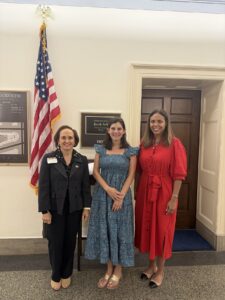
United Way of Metropolitan Dallas advocates meet with the office of U.S. Rep. Keith Self.

Tavana, a dedicated volunteer leader, donor and Women of Tocqueville member, met with North Texas congressional offices. Karen and Hillary advocated for policy positions that would directly benefit our neighbors, including:  

  • Supporting the HELP Act and the 211 social services call referral line, utilized by millions of Americans daily particularly during natural disasters and times of crisis 
  • Protecting and strengthening the Childcare and Development Block Grant and Head Start in the fiscal year 2026 appropriations 
  • Protecting the federal investment in AmeriCorps program, which addresses critical community needs  

These North Texas offices included U.S. Senators John Cornyn and Ted Cruz, along with U.S. House Reps. Jasmine Crockett, Brandon Gill, Julie Johnson, Keith Self and Beth Van Duyne. During Capitol Day, U.S. Sen. Cory Booker addressed the United Way network and called upon leaders that “when we stand together, when we stand united, there’s nothing we can’t do as a nation.” 

One-on-One with a United Way Advocate 

We’re so grateful for advocates like Karen Tavana, who is dedicated to creating meaningful change for North Texans by speaking up for our community. Read on to learn more about her motivations for becoming a United Way advocate and her experience at this year’s Advocacy Forum and Capitol Hill Day.  

Can you share about your background and involvement with United Way of Metropolitan Dallas?   

I originally became familiar with United Way through my employer, Texas Instruments, and its workplace campaigns. In addition to being a long-term donor, I had the pleasure of leading a few division-level workplace campaigns at Texas Instruments. Over the past few years, I have increased my involvement with United Way, joining the Women of Tocqueville Steering Committee and United Way’s Advocacy Committee.   

What interested you in participating in Capitol Hill Day?  

Nonprofits like United Way of Metropolitan Dallas and their partner agencies provide vital resources for the communities they serve, but they can’t do it alone. Public policy is a major factor in the well-being of our communities and any implementation of systemic and sustainable improvements. So, I wanted to become more knowledgeable about how government works. I had previously participated in the Texas State Capitol days organized by United Way of Metropolitan Dallas. These events were excellent and an easy way for me to begin learning about Texas State government. So, I did not hesitate when given the opportunity to attend Capitol Hill Day in D.C. and get a small glimpse of our federal government at work. 

What surprised you the most about meeting with congressional offices?  

My top take-away was how dedicated and knowledgeable the congressional staffers were at the seven offices we visited. Everyone was professional, polite and engaged in the discussion. They wanted to know what we were seeing and hearing in our communities. This was great to see.

Did you have any key take-aways from the meetings or Advocacy Forum Conference overall?  

Attending the Advocacy Forum conference prior to Capitol Day was a great experience. United Way agencies from 49 of 50 states were in attendance, and it was interesting to hear stories from several of them on what is going on in their states and their challenges.  

Do you have any advice for anyone who may be advocating for the first time and meeting with their federal lawmakers?  

Don’t be afraid to jump right in. Pick an issue you are passionate about and make a phone call, send an email or schedule an in-person meeting with your representative. If you don’t have a specific issue to discuss but wanted to get some exposure to your state or federal government processes, I encourage you to go to a future United Way advocacy day at the state or U.S. Capitol. United Way of Metropolitan Dallas is a great partner to help you get started. 

Why is advocacy an important way to drive change in our community?  

Many of the challenges in our communities are complex. Our lawmakers can’t know all the details of every process they are impacting. So, proposed solutions might be well intended but have significant negative impacts or unintended consequences that need to be highlighted and addressed. This is why it is so important for more individuals to communicate with their elected officials. I read somewhere that “advocacy is communicating for positive change.” Who doesn’t want that? 

A Transatlantic Celebration of Philanthropy 

A Transatlantic Celebration of Philanthropy

Welcoming Stéphanie and Jean-Guillaume de Tocqueville to North Texas in Honor of a Legacy of Civic Engagement

TocquevilleLunchHLs-Apr2025-025

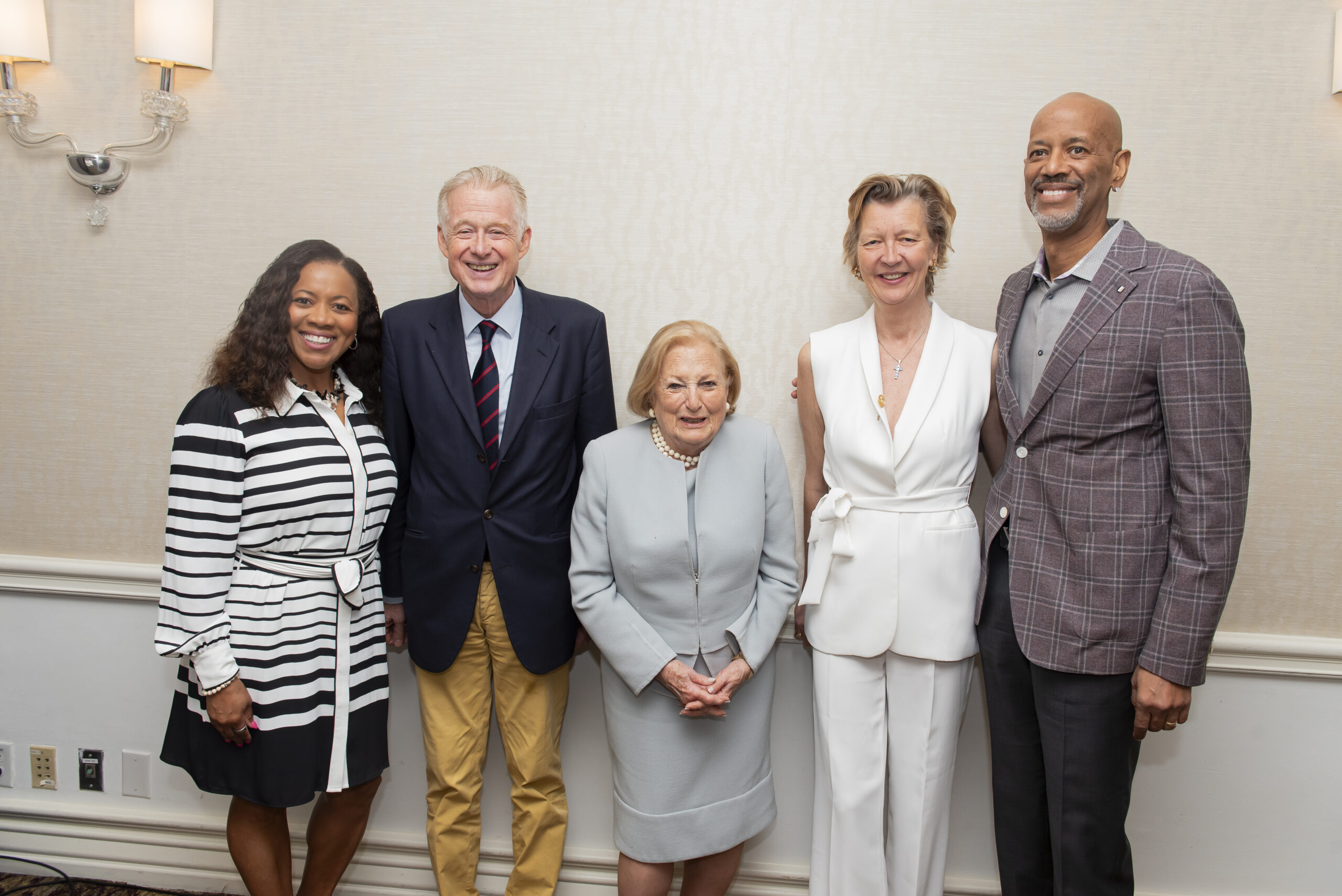
(L to R) Steven and Christy Williams, Stéphanie and Jean-Guillaume de Tocqueville, Jennifer Sampson

As United Way of Metropolitan Dallas celebrates our Centennial anniversary throughout 2025, we were honored to host a truly meaningful visit this spring from Stéphanie and Jean-Guillaume de Tocqueville in Dallas. Jean-Guillaume is a direct descendant of Alexis de Tocqueville and, along with his wife, Stéphanie, serves as co-founder and president of the Tocqueville Foundation in France. Together, they carry forward Alexis de Tocqueville’s enduring legacy of civic engagement—a spirit of civic responsibility that continues to inspire United Way’s mission and the work of our Tocqueville Society in North Texas.

  • Paris Group

  • Paris-Trip-7

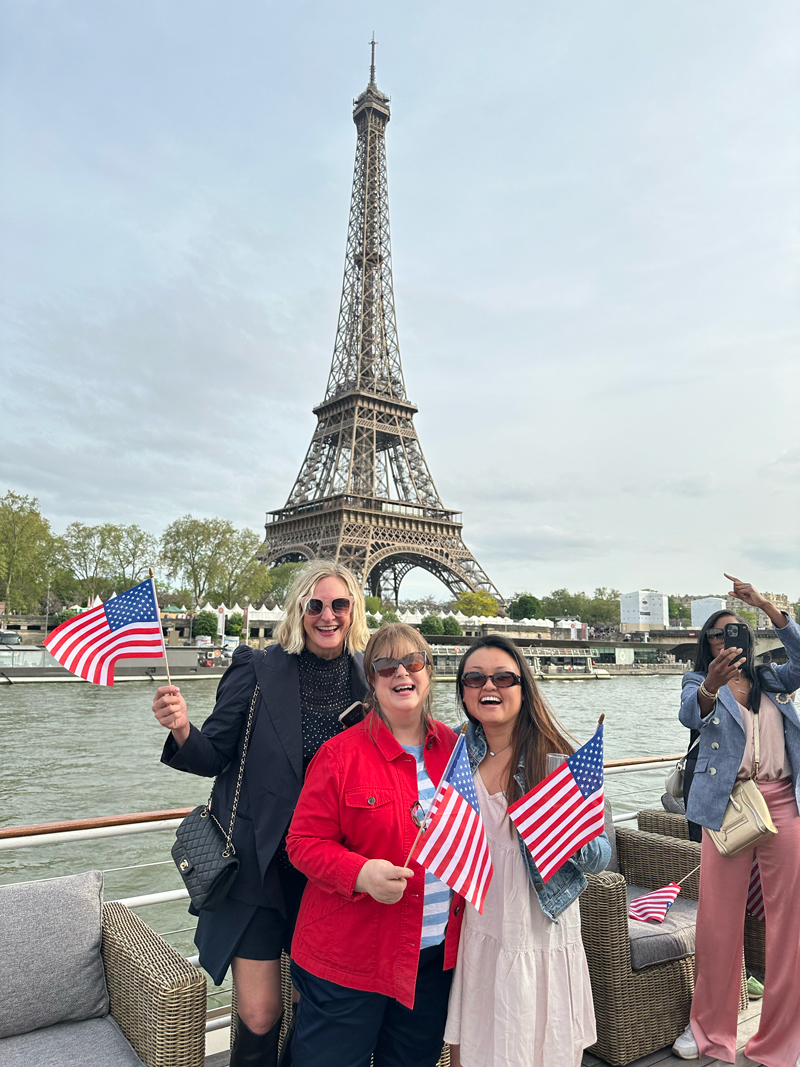
    (L to R) Jennifer Sampson, Terri and Meili West

  • Paris Trip 3

  • Paris-Trip-6

This reflection on the Tocquevilles’ visit is especially poignant as we prepare to celebrate the Fourth of July—a moment to honor the ideals of liberty, democracy and civic unity that inspired Alexis de Tocqueville’s landmark journey through America nearly two centuries ago. And as our nation looks ahead to 2026, when we will commemorate the 250th anniversary of the signing of the Declaration of Independence, the timing feels all the more meaningful. That milestone—known as the Semiquincentennial—will also serve as a focus for next year’s Tocqueville Conversations in Normandy, where global thought leaders will gather to reflect on democracy’s past, present and future.

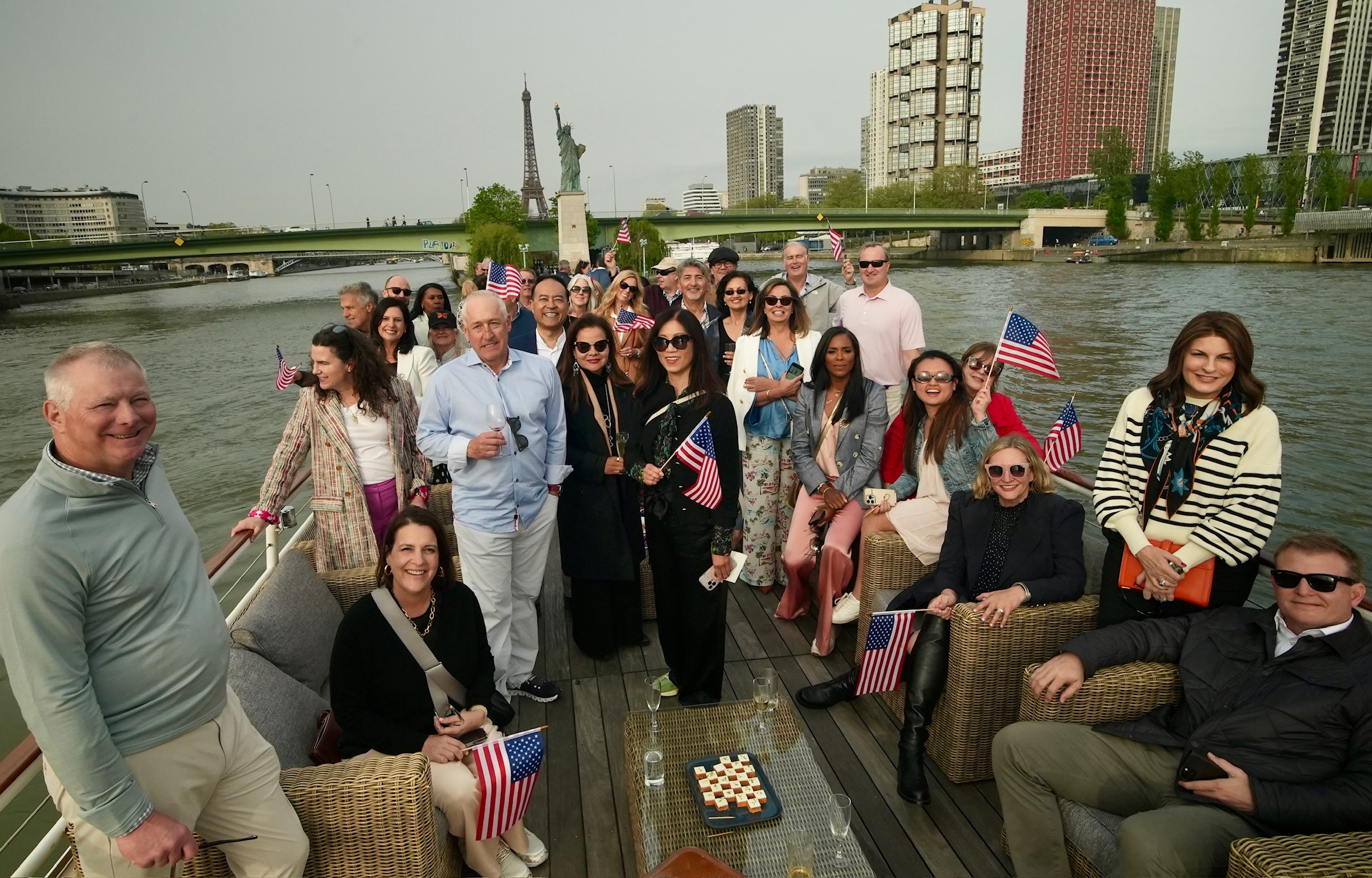
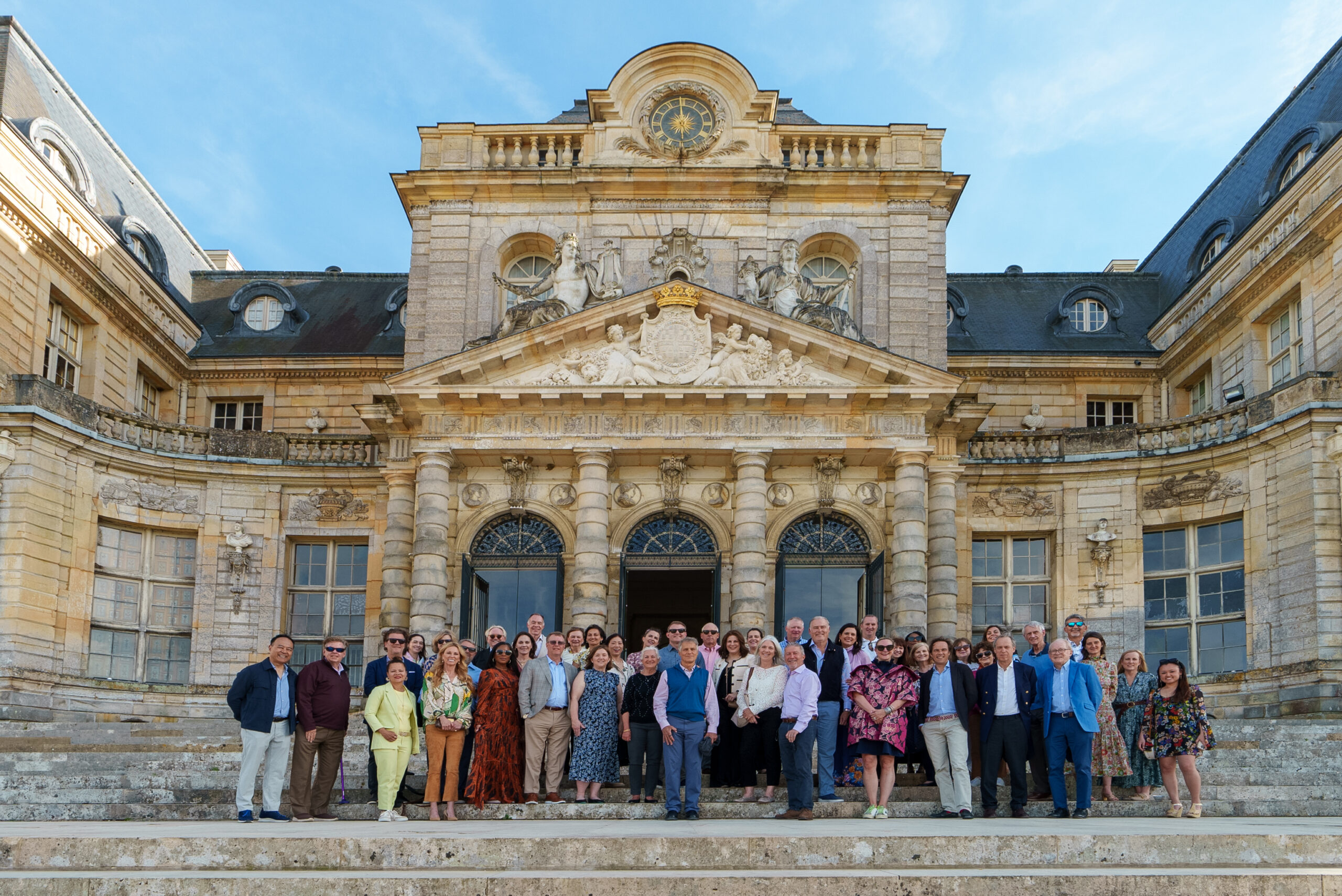
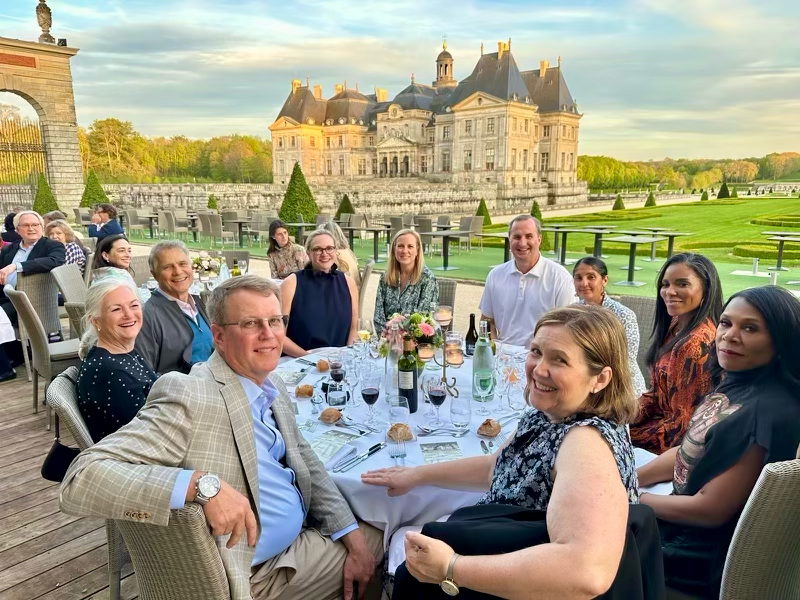
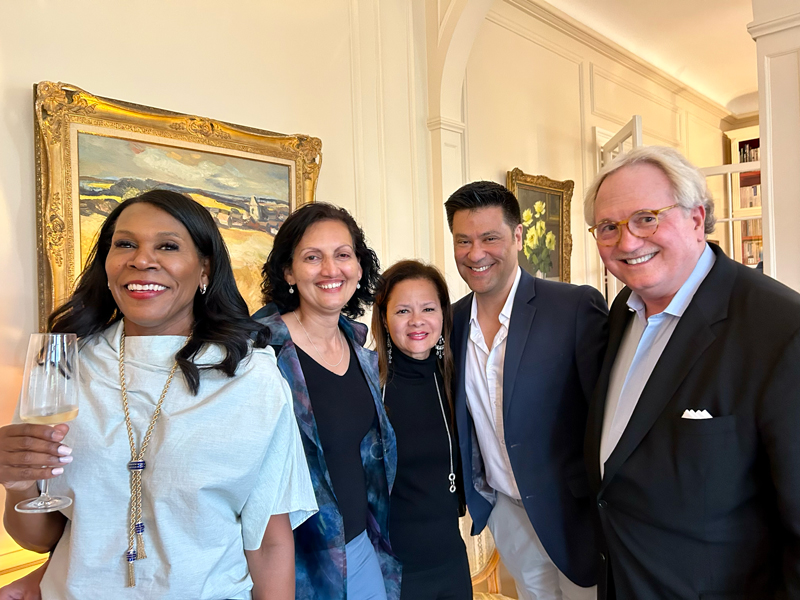
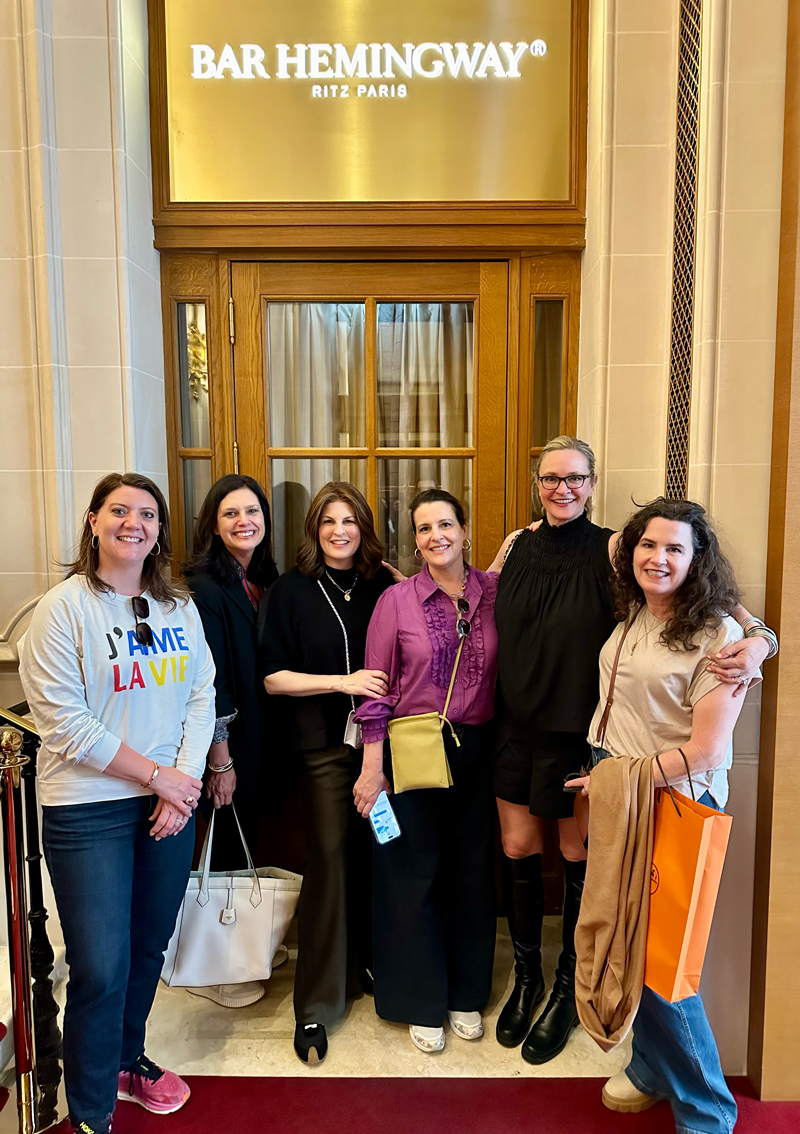
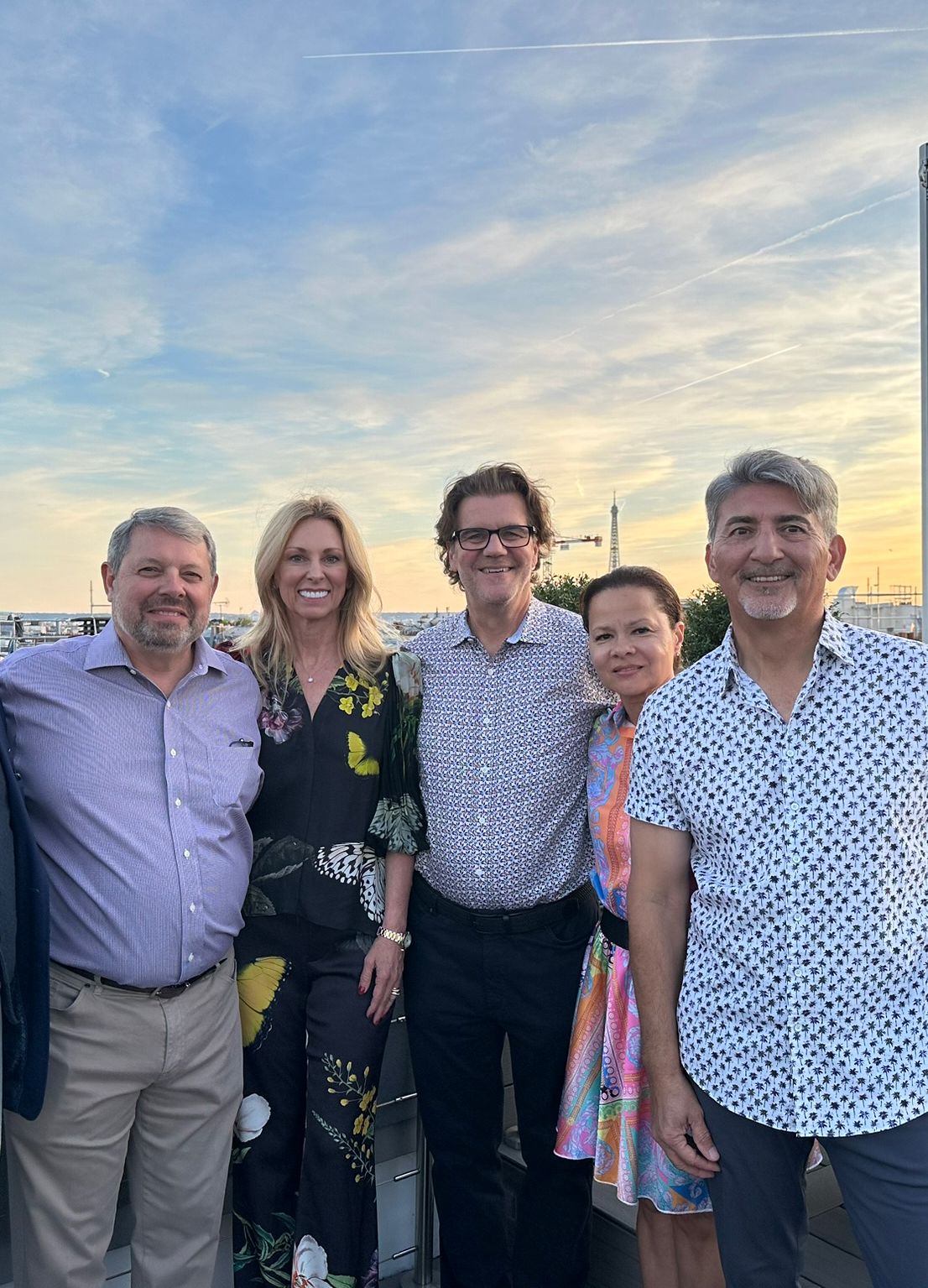
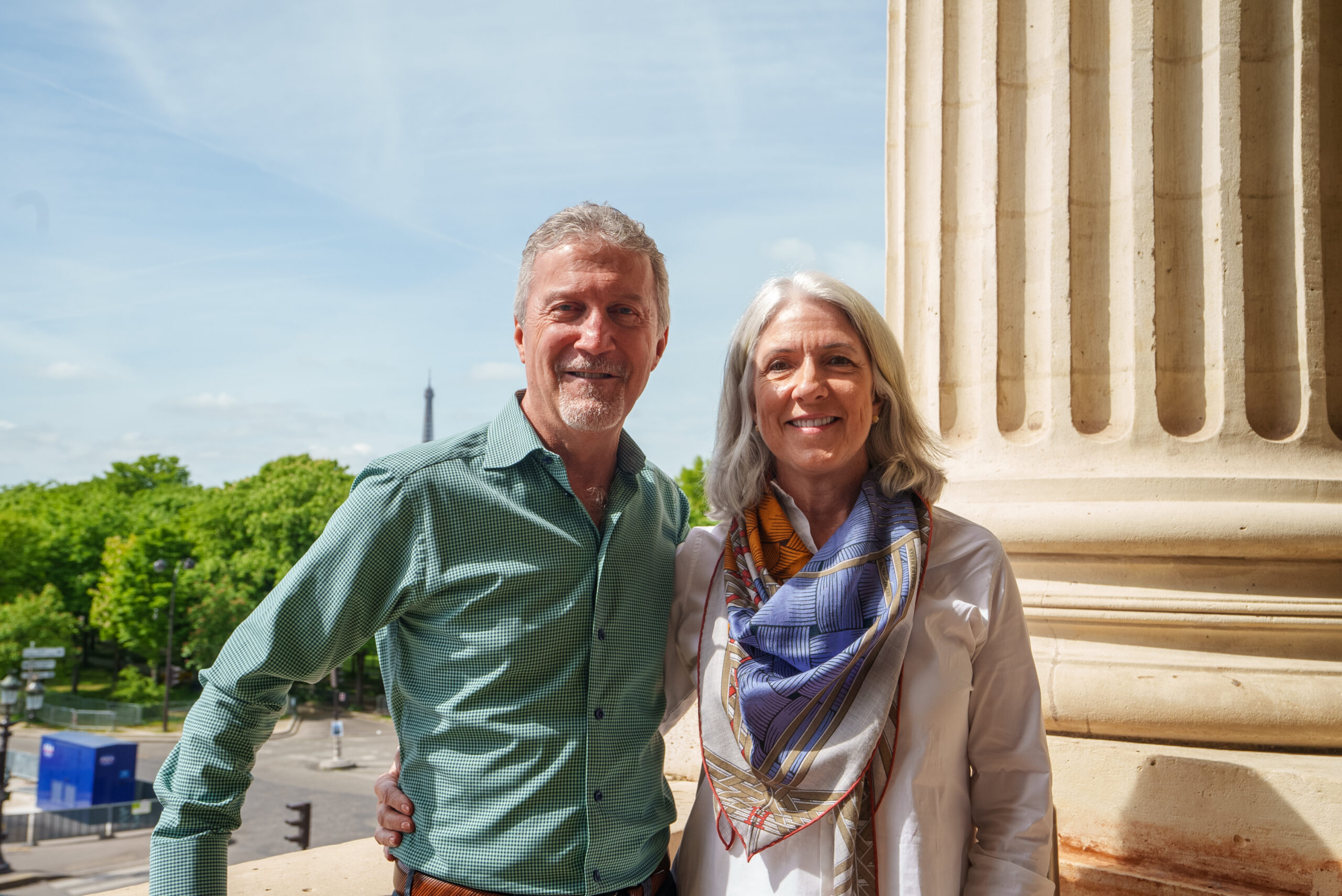
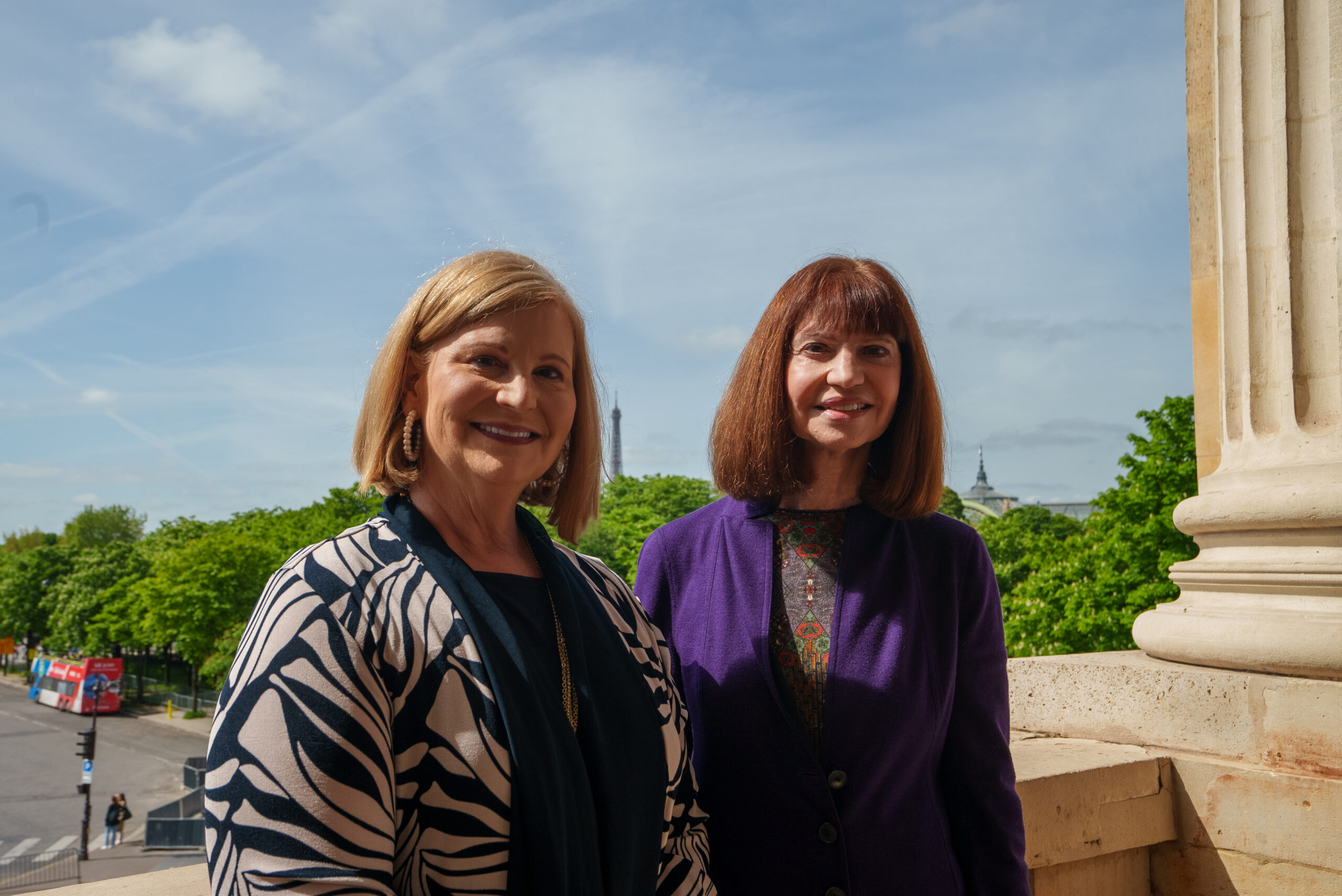
The Tocquevilles’ visit to Dallas was more than a tribute to the past—it was a powerful affirmation of a shared future rooted in community leadership, strategic philanthropy and civic responsibility. This special moment also marked a reunion following United Way of Metropolitan Dallas’ Tocqueville Society trip to France in spring 2024, held in celebration of the 100th anniversary of the organization. During the four-day journey through Paris and its countryside, the Tocquevilles graciously hosted 45 Tocqueville Society members, guiding them through the historical and philosophical landmarks that continue to shape civic life today.

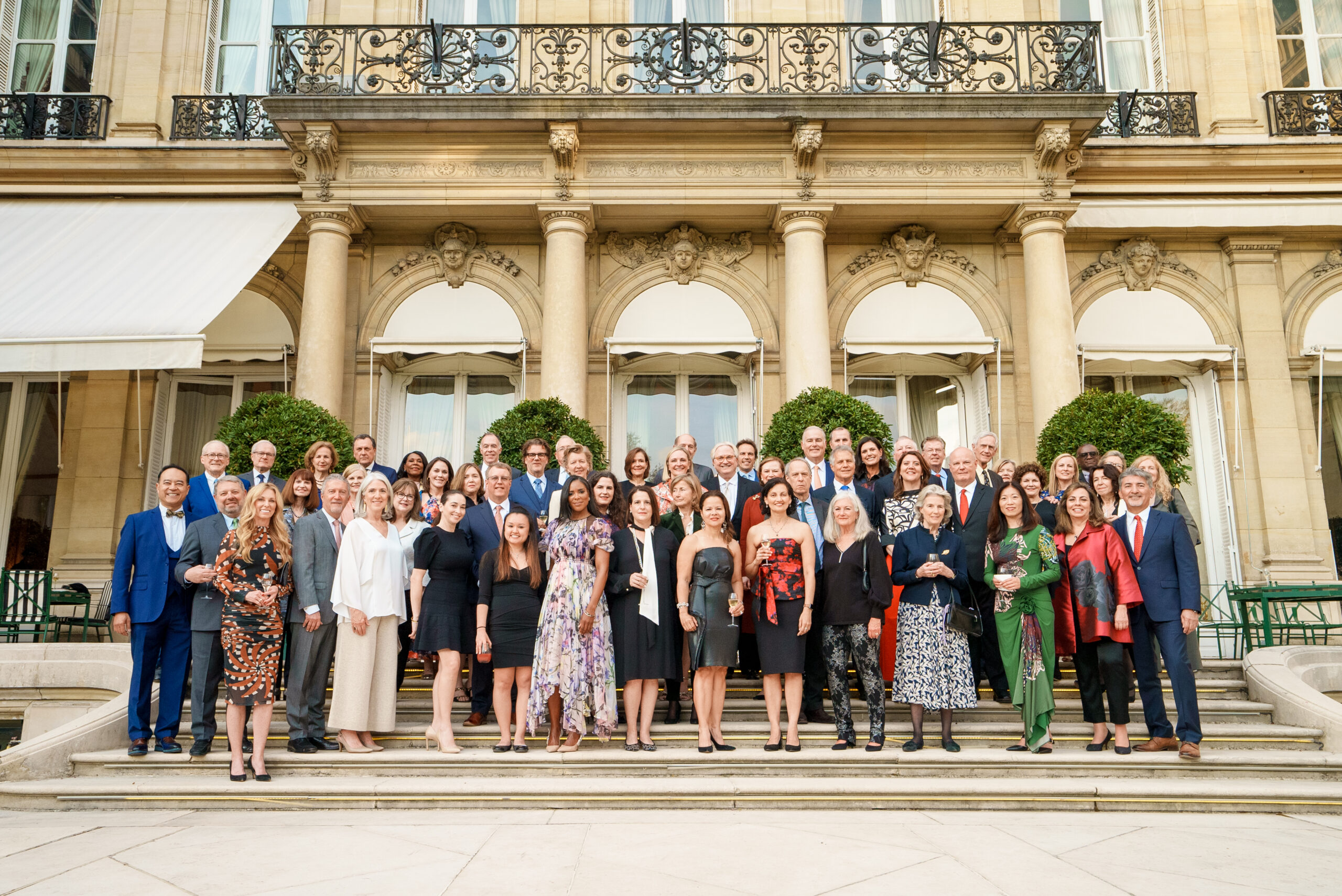
  • Group photo at Ambassador home

  • Paris Trip

    Stéphanie de Tocqueville

  • Paris Tocqueville Trip-00160

  • Paris-Trip-15

    Mark and Debbie McComas, Christy Williams, Jessica Shepherd, Jot de Vogue, Edward Sampson, Susan Hutcheson, Jennifer Sampson, Dan Patterson, Mary McDermott Cook

  • Paris-Trip-12

    (L to R) Christy Williams, Neena Newberry, Shawna Wilson, Michael Turner and Don Glendenning

  • Paris-Trip-11

    Christy Williams and Jessica Shepherd

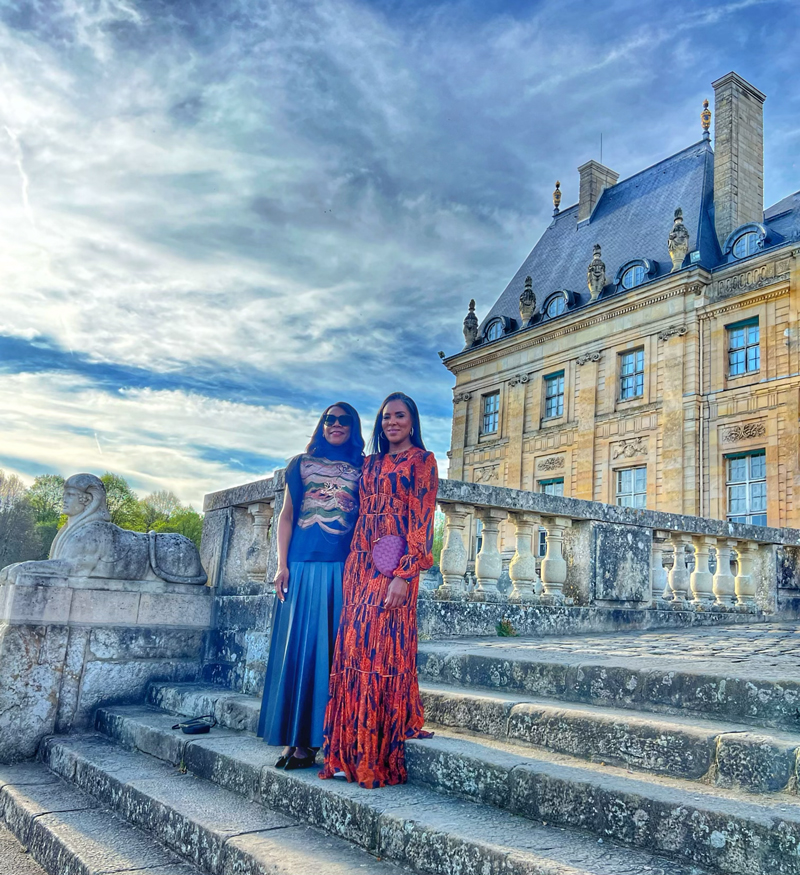
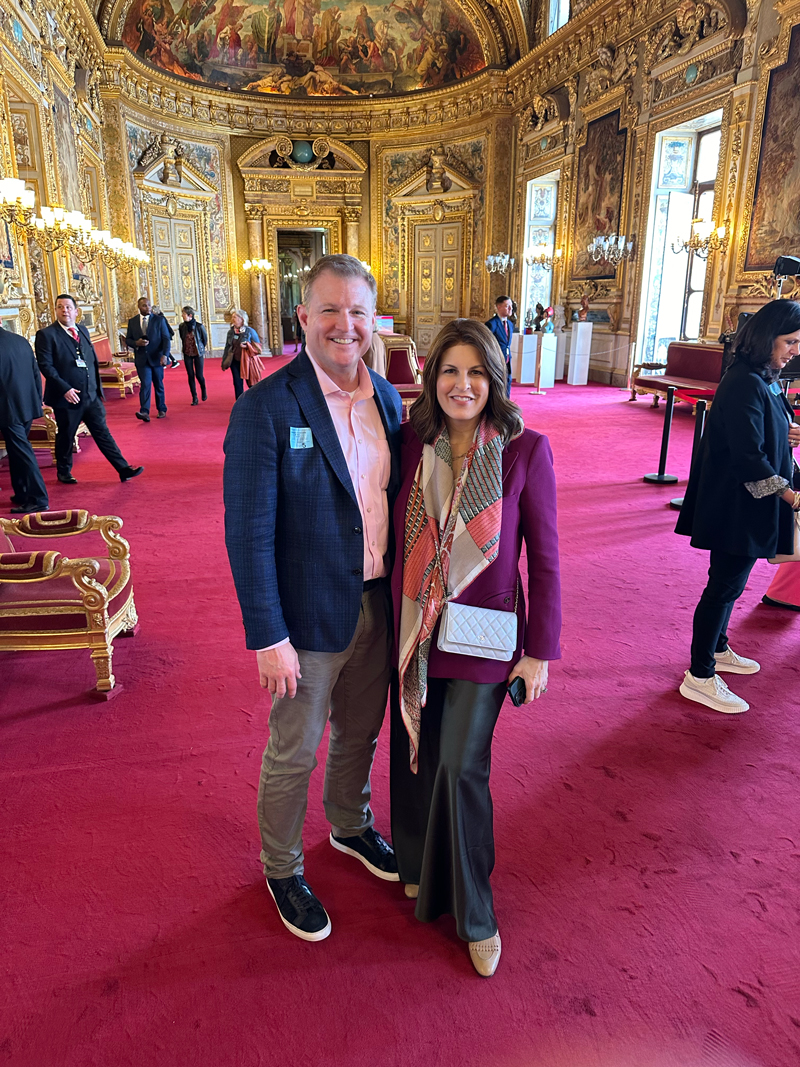
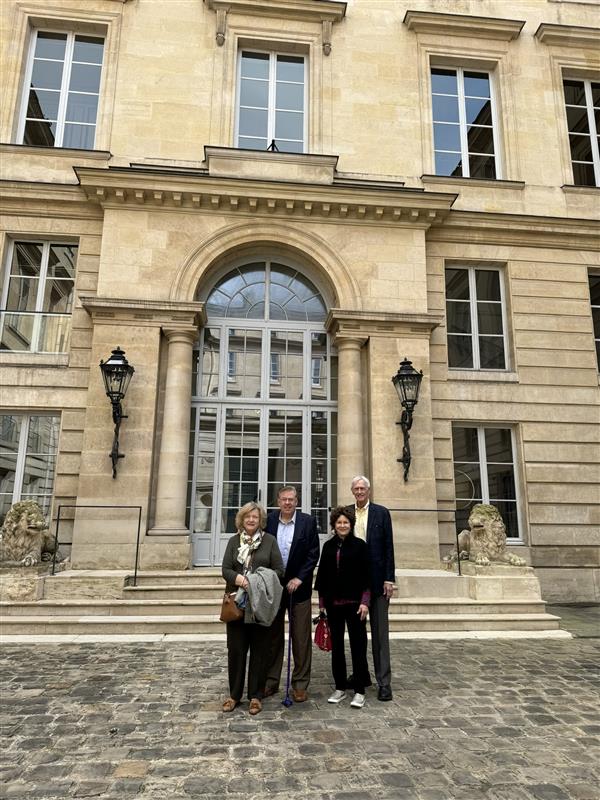
The experience began at the George Marshall Center, where we reflected on the enduring power of post-war alliances and shared purpose. We were welcomed at the U.S. Ambassador’s residence, toured the French Senate, and visited iconic sites such as the Château de Vaux-le-Vicomte. Each stop served as a poignant reminder of the value of civic duty, cross-cultural connection, and collective progress. Far more than a celebration, the trip deepened our understanding of the principles that anchor our mission at United Way: liberty, equality and the power of engaged communities. Welcoming the Tocquevilles to Dallas offered us the chance to return the hospitality and honor their legacy—it was a meaningful and historic chapter in our Centennial celebration, one we will remember for decades to come.

The Tocquevilles’ visit to Dallas was more than a tribute to the past—it was a powerful affirmation of a shared future rooted in community leadership, strategic philanthropy and civic responsibility. This special moment also marked a reunion following United Way of Metropolitan Dallas’ Tocqueville Society trip to France in spring 2024, held in celebration of the 100th anniversary of the organization. During the four-day journey through Paris and its countryside, the Tocquevilles graciously hosted 45 Tocqueville Society members, guiding them through the historical and philosophical landmarks that continue to shape civic life today.

  • Paris-Trip-5

    Trey and Erin Nealy Cox

  • Paris-Trip-9

    (L to R) Stacey Dore, Cecily Gooch, Erin Nealy Cox, Carrie Kirby, Jennifer Sampson, Deb Gibbins

  • Paris Trip 16

    Mary McDermott Cook and Don Glendenning

  • IMG_0202

    (L to R) Jan and Mike Sharry, Gail McDonald and Jeffrey Murphy

  • IMG_6186

    (L to R) Raymond Faus, Kristy Faus, Tom Frei, Shawna Wilson, Mike Galvan

  • Paris Tocqueville Trip-00268

    Kristy Faus and Neena Newberry

  • Paris Tocqueville Trip-00217

    Kevin and Carol March

  • Paris Tocqueville Trip-00197

    Gretchen Minyard Williams and Liz Minyard

  • Paris Tocqueville Trip-00225

    Kristina and John Hallam

  • Paris Trip 14

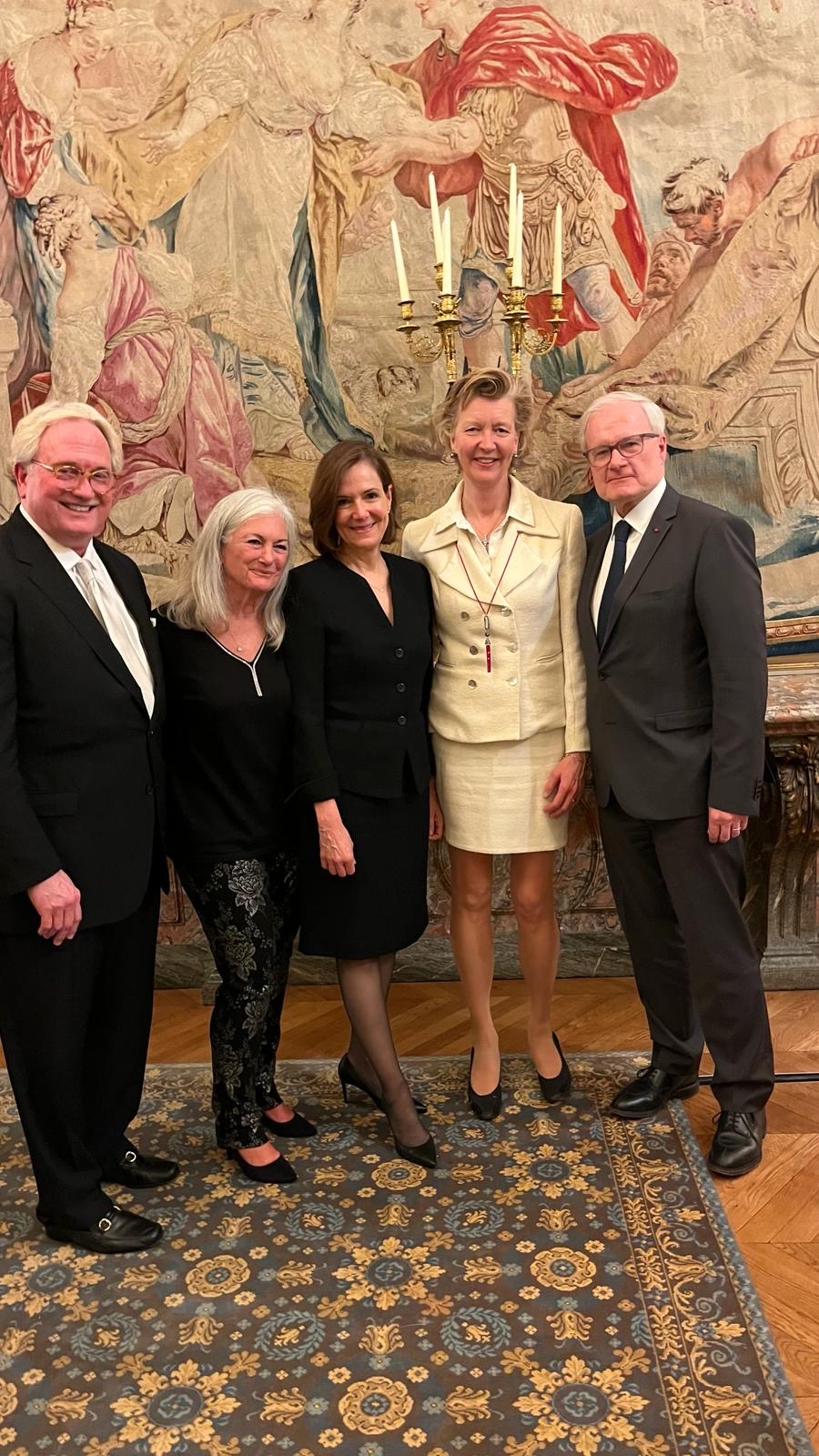
    (L to R) Don Glendenning, Mary McDermott Cook, Ambassador Denise Bauer, Stephanie de Tocqueville, Ambassador Bernard Emie

About the Tocqueville Name and Legacy

At United Way of Metropolitan Dallas, the Ruth Sharp Altshuler Tocqueville Society celebrates an extraordinary circle of leaders who are passionate about creating lasting change in North Texas. Named in honor of the beloved Dallas philanthropist Ruth Sharp Altshuler, this exclusive group is made up of visionary civic and business changemakers whose generosity fuels progress across our community by supporting United Way programs and investments.

The Tocqueville legacy stretches far beyond Dallas. In 2012, Stéphanie and Jean-Guillaume de Tocqueville founded the Tocqueville Foundation in Normandy, France—the philosopher Alexis de Tocqueville’s hometown—to carry forward his legacy of civic engagement. Their mission was an ambitious one: to strengthen civil society and spark community action, just as Alexis envisioned during his travels across early America.

Jean-Guillaume, a distinguished attorney and former partner at Jones Day in Paris, and Stéphanie, chair of the Association for the Alexis de Tocqueville Prize, continue to champion these values on a global scale. Their commitment to service and philanthropy is a powerful reflection of their family’s enduring spirit—and a perfect match for the mission of the United Way of Metropolitan Dallas Tocqueville Society, founded in 1986.

This April, Jean-Guillaume and Stéphanie de Tocqueville joined our community and leaders in the Live United movement for a series of events that spotlighted philanthropic leadership at the highest level.

Bench & Bar Boo-Ray

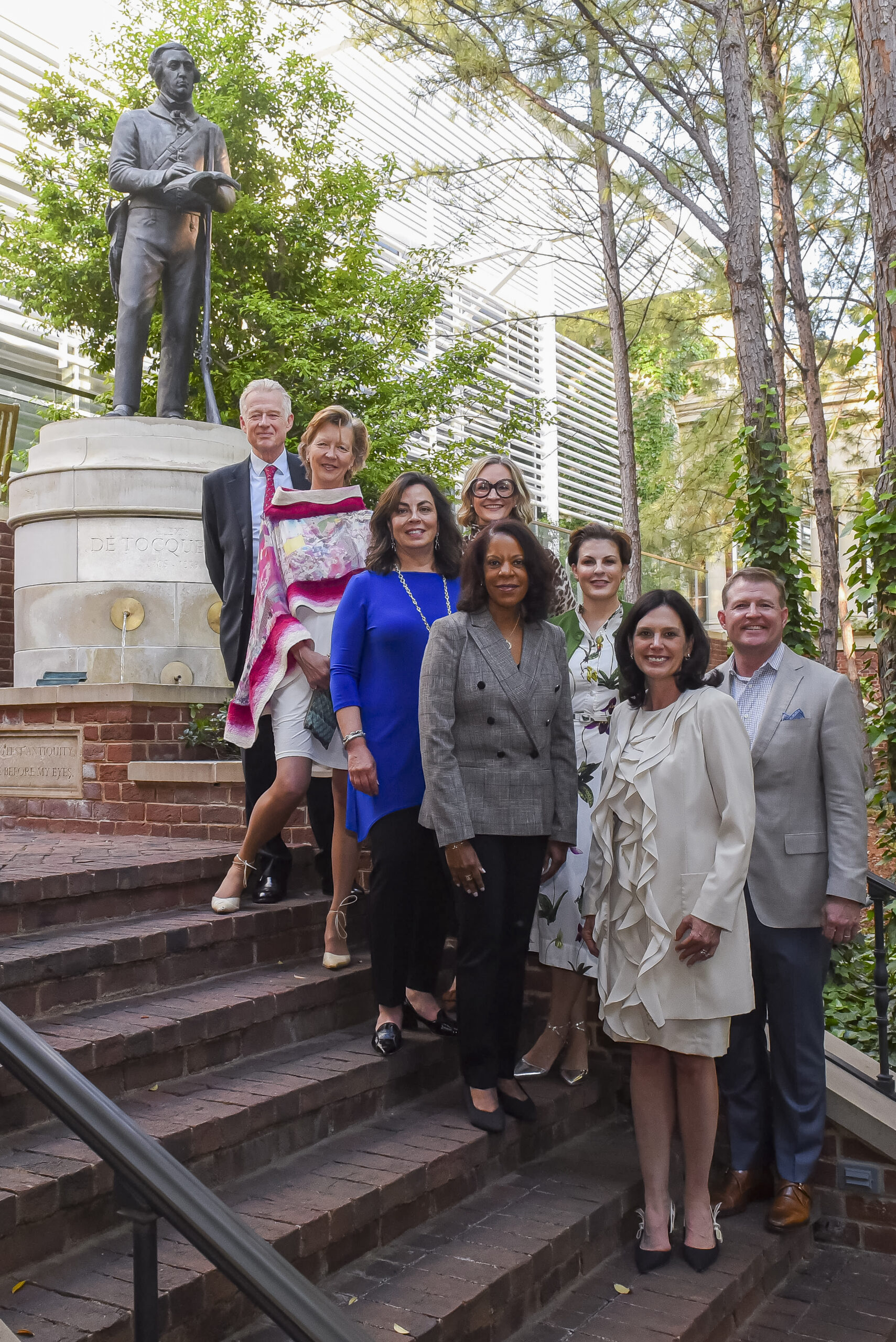
  • Group Photo in front of Tocqueville Statue

    (L to R) Jean-Guillaume de Tocqueville, Stéphanie de Tocqueville, Hilda Galvan, Jennifer Sampson, Sandra Phillips, Erin Nealy Cox, Cecily Gooch, Trey Cox

  • BenchandBarHLs-Apr2025-094

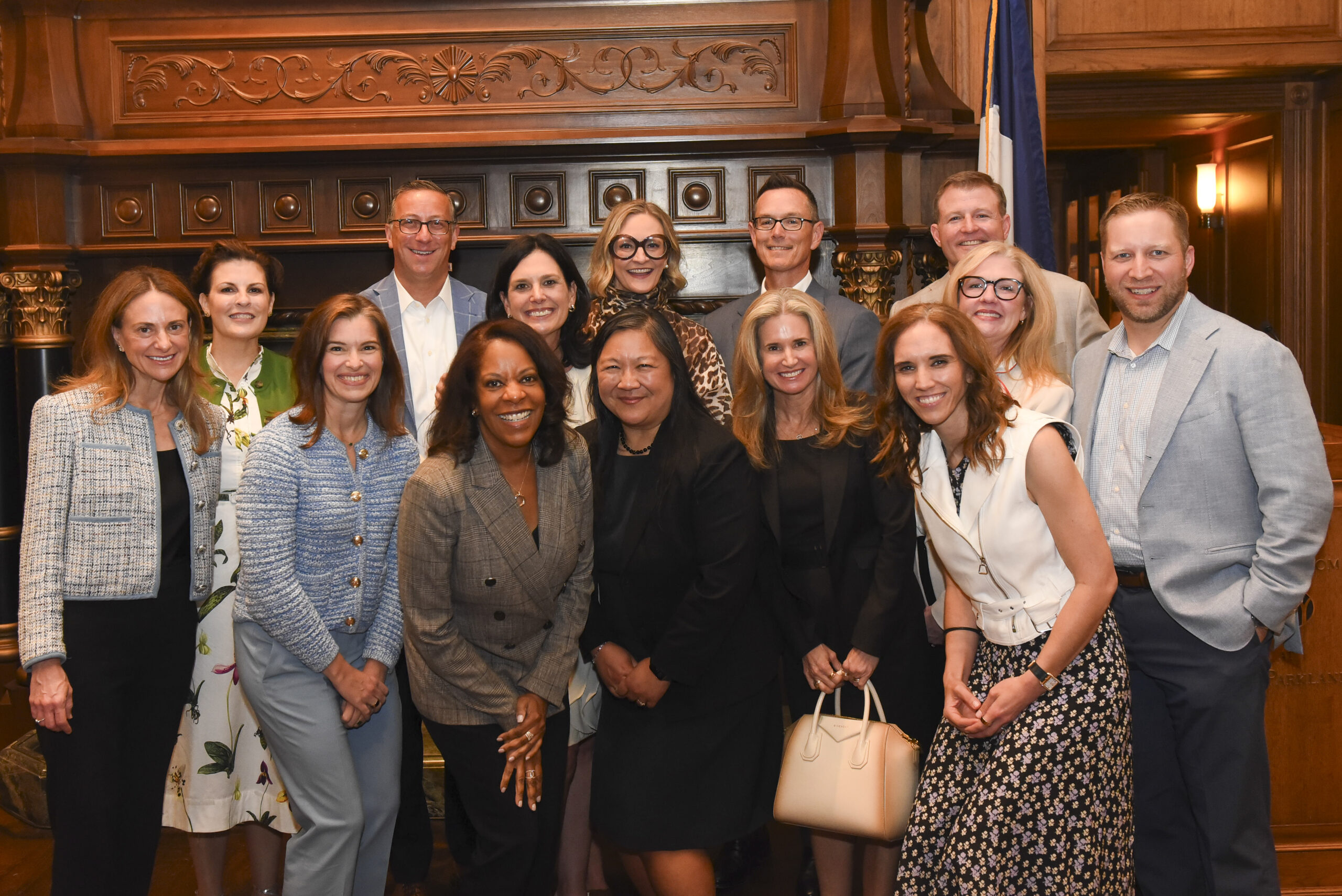
    General Counsel Host Committee and Sponsors

  • BenchandBarHLs-Apr2025-033

    Jean-Guillaume and Stéphanie de Tocqueville

  • BenchandBar-Apr2025-256

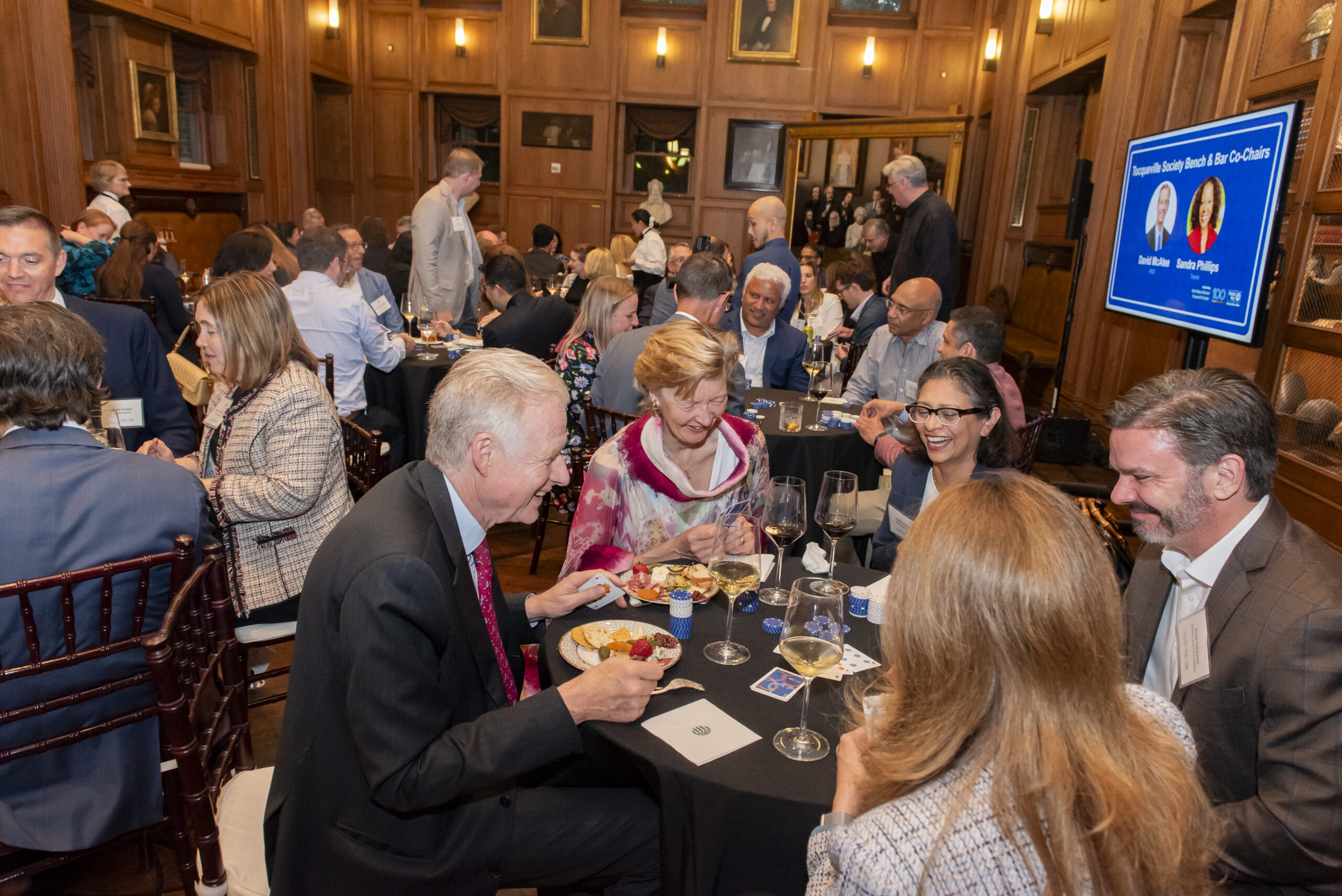
    Playing at the table

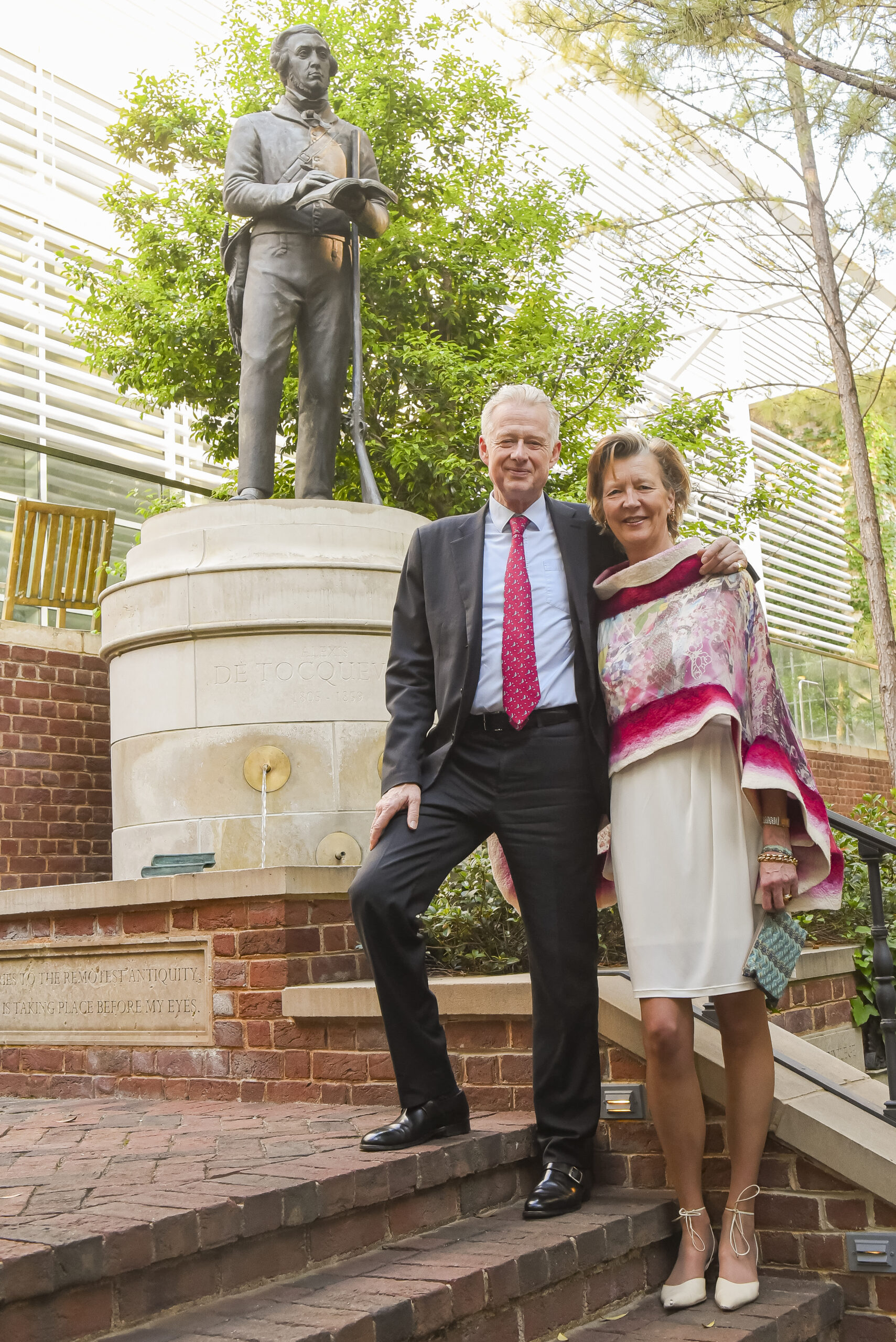
The visit began at the 3rd Annual Bench & Bar Boo-Ray Tournament held at Old Parkland. Designed to honor the legacy of the historic Parkland Hospital, this prestigious office campus is rich with fine art, rare artifacts and the spirit of entrepreneurship. It stands as a tribute to history, a reflection of American ideals and a celebration of what’s possible when a community unites. Jean-Guillaume and Stéphanie de Tocqueville shared a meaningful moment honoring their family legacy with a visit to the striking statue of Alexis de Tocqueville, prominently featured on the campus. The statue is located near the Tocqueville Steps, where quotes from Alexis de Tocqueville are displayed.

“Looking back century by century to remotest Antiquity, I see nothing that resembles what I see before me.”

Alexis de Tocqueville

Upon their return to France, Stéphanie shared that the Tocqueville Foundation board members were delighted and fascinated by the photos—particularly by the statue’s depiction of Alexis de Tocqueville as a frontier-style pioneer, complete with a rifle, which they found to be a charmingly American interpretation of his legacy. As a former partner at Jones Day, Jean-Guillaume especially appreciated this unique event, which brought together leaders from the North Texas legal community for an evening of fellowship, spirited card play and a shared commitment to community impact through the Tocqueville Society.

Read our Boo-Ray Tournament recap blog here

Reconnecting with Paris Travelers
and Meeting New Faces

Throughout their visit, the Tocquevilles were welcomed with warm hospitality from local leaders and friends of United Way. Special thanks to Mary McDermott Cook and Carol and Don Glendenning, who each hosted private gatherings in their honor. (Pictured: Moments from the event hosted by Mary McDermott Cook.)

TocquevilleLunchHLs-Apr2025-025

Carol and Don Glendenning warmly hosted the Tocquevilles for an intimate dinner in their home, joined by Paris travelers, close friends and longtime United Way of Metropolitan Dallas Tocqueville supporters. They received a true taste of Texas hospitality infused with French influence. Guests enjoyed thoughtful menu items, including fried green tomatoes with French endive, smoked Texas short rib and French wines. Adding to the festive atmosphere, an orchestra entertained guests with classic French music, as well as a light-hearted, specially commissioned piece based on music from Les Misérables, with lyrics playfully rewritten for the occasion. It was a memorable night of fellowship, conversation, Texan-isms and a shared commitment to building a stronger North Texas.

Civic Dialogue at the Bush Center

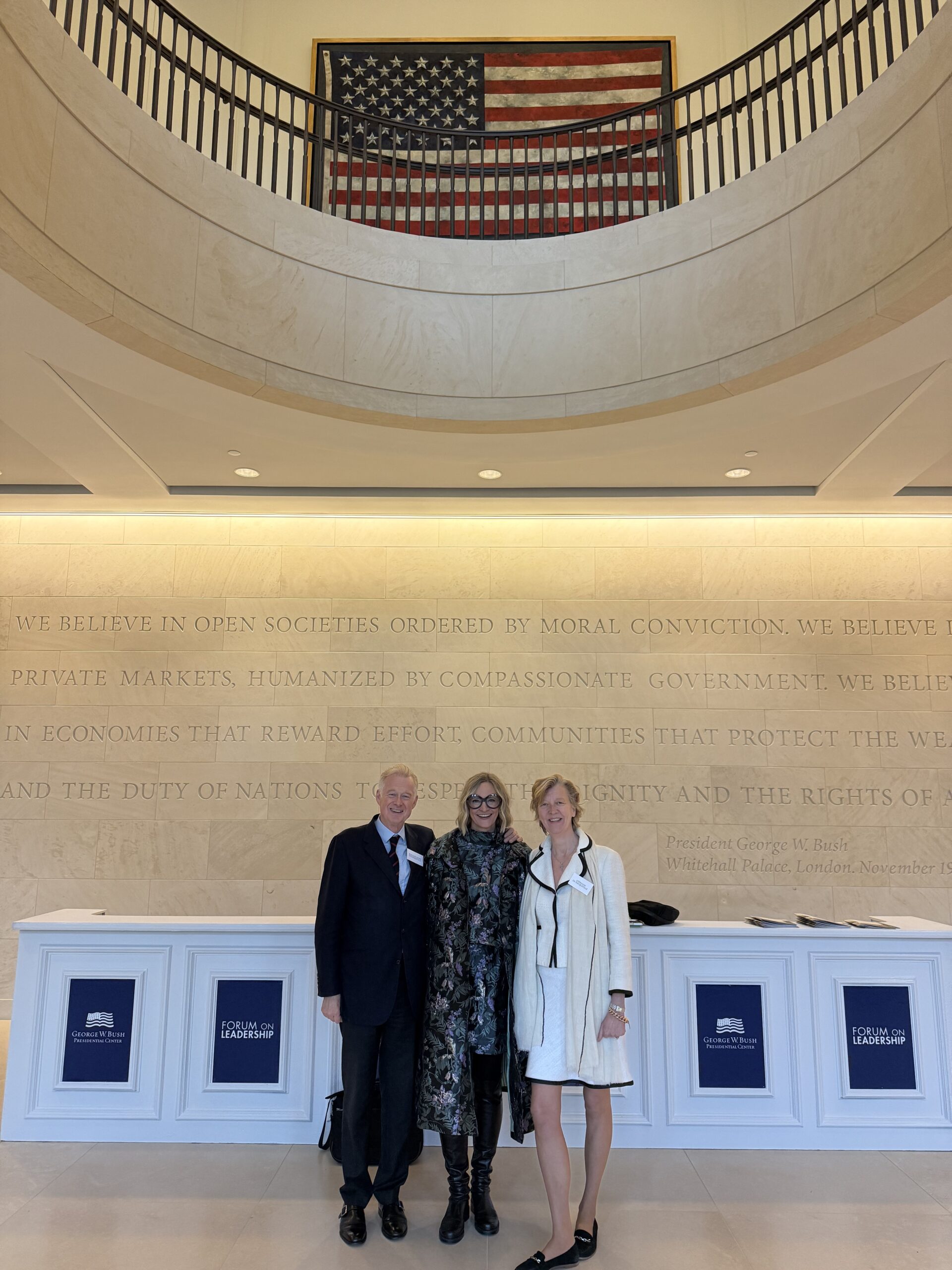
The Tocquevilles were honored to participate in several events at the George W. Bush Presidential Center, including recording an episode of The Strategerist Podcast. They joined Strategerist host Andrew Kaufmann and the director of Global Policy at the Bush Institute, Chris Walsh, to discuss their passion for defending, preserving and promoting democracy, their ongoing transatlantic partnership with United Way of Metropolitan Dallas, and what makes the Tocqueville family optimistic for the future.

Listen to the podcast

Bush Center

(L to R) Haviv Ilan, Ronit Ilan, Jean-Guillaume de Tocqueville, Stéphanie de Tocqueville, Jennifer Sampson, Kevin March, Carol March, Jennifer Sampson, Ed Sampson

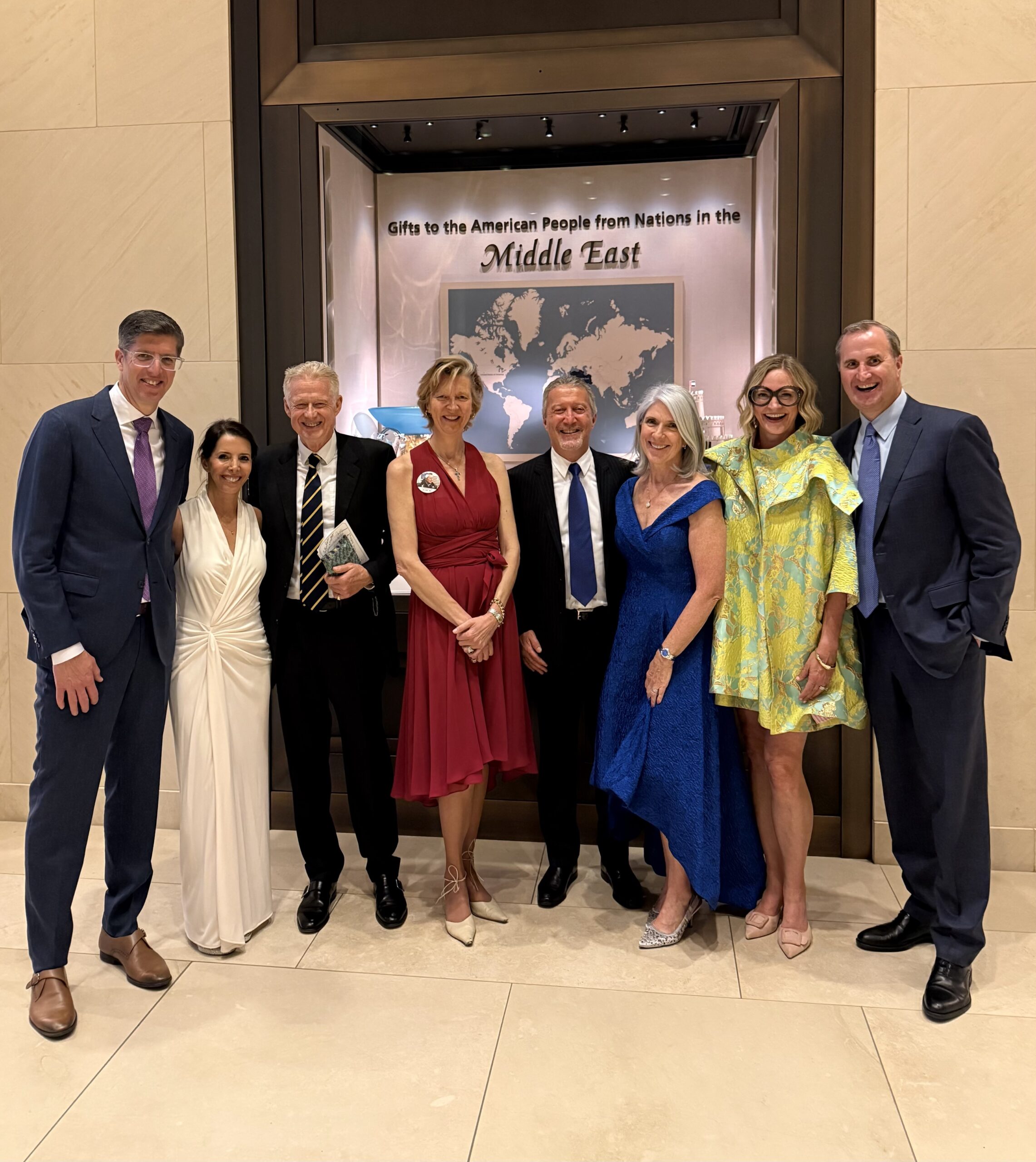
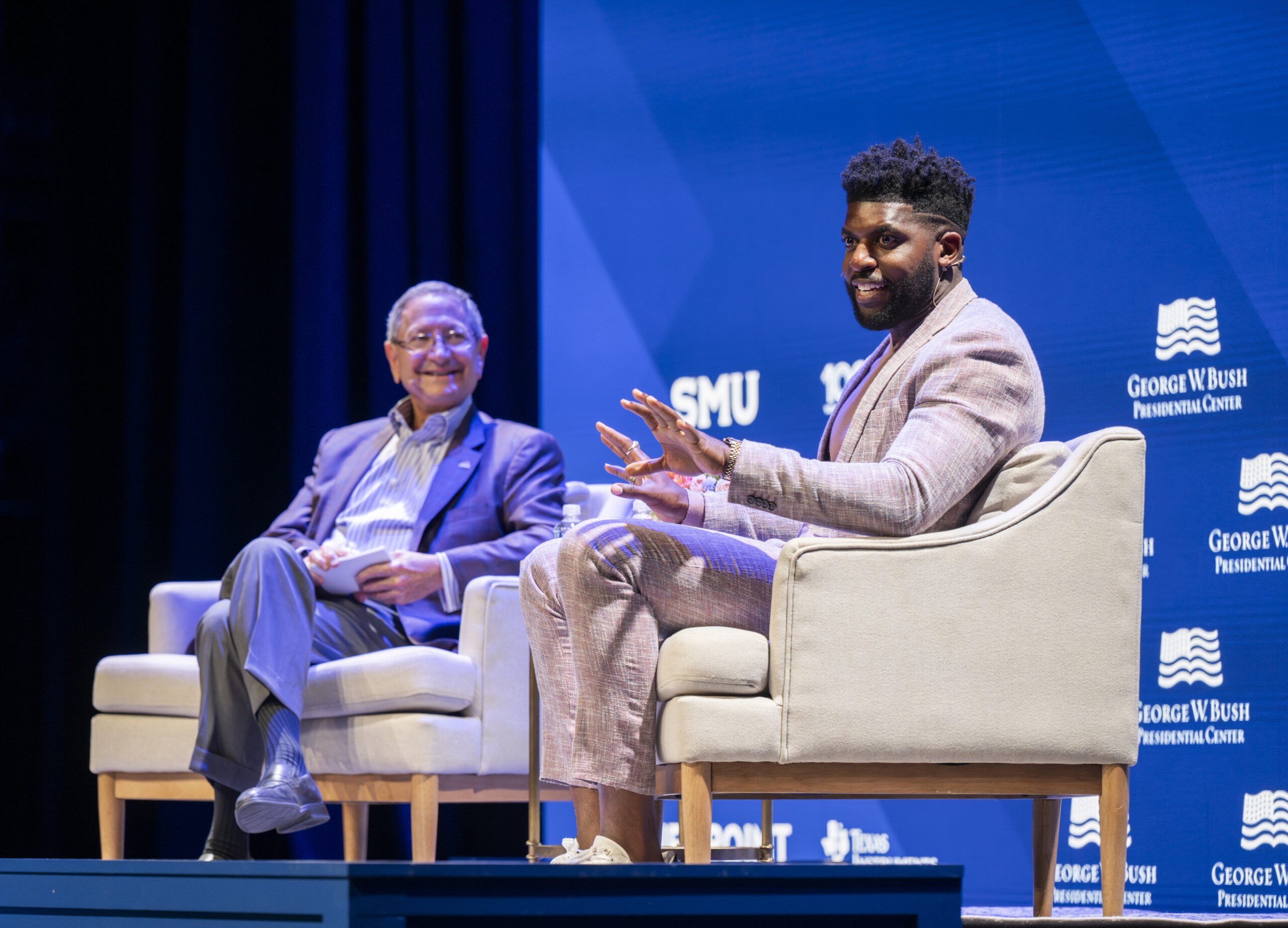
During their visit, they attended the Forum on Leadership Gala, where Dr. Robert M. Gates received the George W. Bush Medal for Distinguished Leadership, participated in a day full of panels featuring changemakers from Dallas and beyond, and took part in a thought-provoking community conversation with Dallas native, author and former NFL player Emmanuel Acho.

Click here to watch the video on-demand of the Emmanuel Acho event, which will inspire you to shift mindsets, pursue bold goals and lead meaningful change—in your own life and right here at home in North Texas.

Watch the video

  • Bush Center Photo

    (L to R) Jean-Guillaume de Tocqueville, Jennifer Sampson, Stéphanie de Tocqueville

  • 20250424-Forum on Leadership-McFarlin Memorial Auditorium-043.j

    Ken Hersh and Emmanuel Acho

The Tocquevilles’ commitment to advancing civic dialogue continues on both sides of the Atlantic. This spring, they also hosted the annual Tocqueville Conversations in Normandy, France—a global forum that brought together thought leaders, academics and civic changemakers to explore the future of democracy and civil society. This event, organized by the Tocqueville Foundation, reflected the same values that united our communities during their visit: open dialogue, civic responsibility and the power of engaged citizens to drive meaningful change.

A Transatlantic Celebration of Philanthropy

TocquevilleLunchHLs-Apr2025-025

(L to R) Carol and Don Glendenning, Kristy Faus

The visit to Dallas also served as a reunion with many of the United Way of Metropolitan Dallas supporters the Tocquevilles had previously hosted in Paris, reinforcing the global nature of our shared mission. The Tocqueville Society Luncheon, sponsored by HN Capital, was held at the historic Mansion on Turtle Creek, an iconic Dallas landmark also celebrating its 100th anniversary this year. The Mansion was the visionary creation of Caroline Rose Hunt, a renowned Dallas entrepreneur and philanthropist who transformed the former Sheppard W. King estate into a world-class hotel in 1980—launching the prestigious Rosewood Hotels & Resorts brand. Hunt’s legacy extends far beyond hospitality: as a young graduate, she went door to door raising funds for the Dallas Community Chest and went on to become a co-founder of United Way of Metropolitan Dallas. Her service spanned more than five decades, including roles as co-chair of the Tocqueville Society and honorary chair of the Unite Forever Campaign. In 2003, she received United Way of Metropolitan Dallas’ highest honor, the J. Erik Jonsson Award. The luncheon setting was a meaningful tribute to her lasting contributions and to the continued philanthropic leadership of her family, who remain active supporters of United Way of Metropolitan Dallas in her honor.

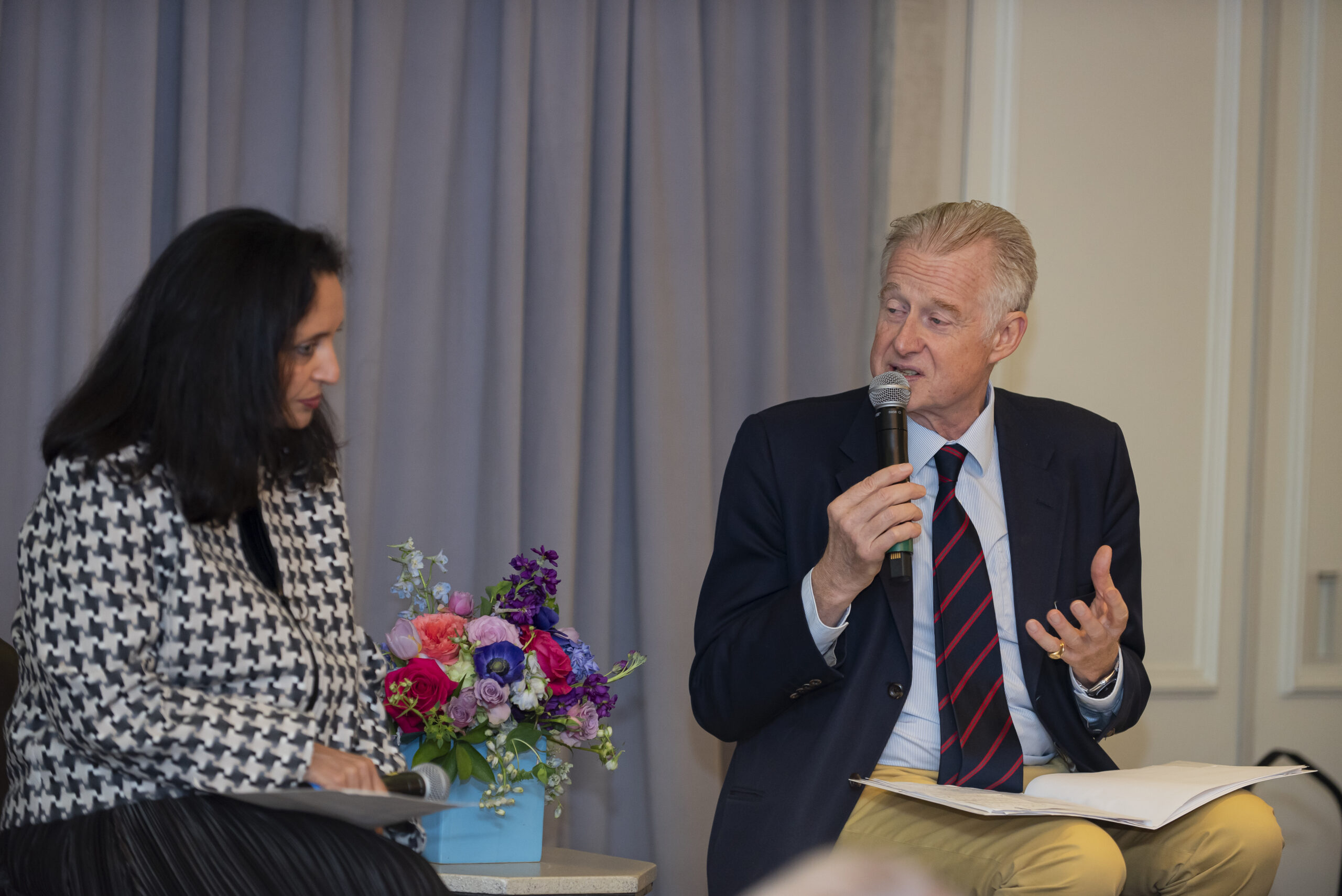
At the Tocqueville Society Luncheon, Jean-Guillaume took part in a fireside chat with Sonal Shah, CEO of The Texas Tribune, and he remarked to the crowd that Dallas was where he first learned about philanthropy. He was so impressed by the depth and impact of United Way’s work in North Texas that he described it as truly “Tocquevellian”—a powerful reflection of the civic spirit and community-driven values that have long defined his family’s legacy.

  • TocquevilleLunchHLs-Apr2025-094

    (L to R) Jennifer Sampson, Stéphanie de Tocqueville, Christy and Steven Williams, Jean-Guillaume de Tocqueville

  • TocquevilleLunchHLs-Apr2025-086

    (L to R) Michelle Thomas, Jean-Guillaume de Tocqueville, Margot Perot, Stéphanie de Tocqueville, Major Thomas

  • TocquevilleLunchHLs-Apr2025-019

    Jean-Guillaume de Tocqueville, Stéphanie de Tocqueville, Carol Glendenning

  • TocquevilleLunchHLs-Apr2025-027

    Tocqueville Paris Travelers

  • TocquevilleLunchHLs-Apr2025-052

    Sonal Shah and Jean-Guillaume de Tocqueville

The lunch also served as a special announcement for a transformative $5 million gift to United Way of Metropolitan Dallas from longtime supporters Carol and Kevin March. The historic multi-million-dollar investment will directly support United Way’s most critical initiatives—driving measurable, generational progress in education, income and health as we launch into our second century of community impact in North Texas. Read highlights of the luncheon here.

  • Marches

    Kevin and Carol March

  • March

    Carol March

United for Impact:
A Centennial Celebration of Global Civic Leadership

  • Tocqueville Crow Tour

    Stéphanie de Tocqueville and Jean-Guillaume de Tocqueville

  • Crow Library Tour 2

    Stéphanie de Tocqueville and Jean-Guillaume de Tocqueville

  • Crow Library Tour 3

    Stéphanie de Tocqueville and Jean-Guillaume de Tocqueville

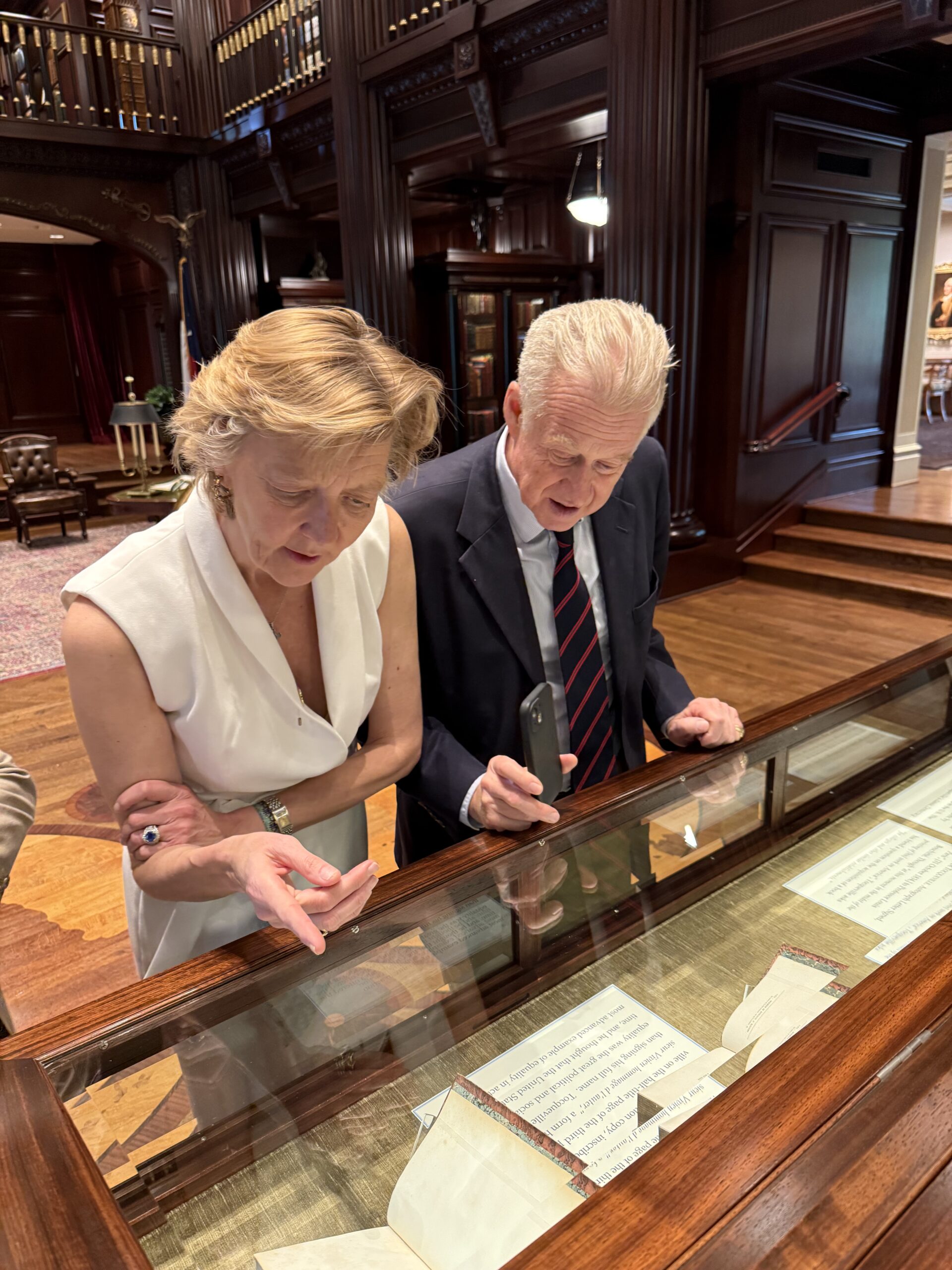
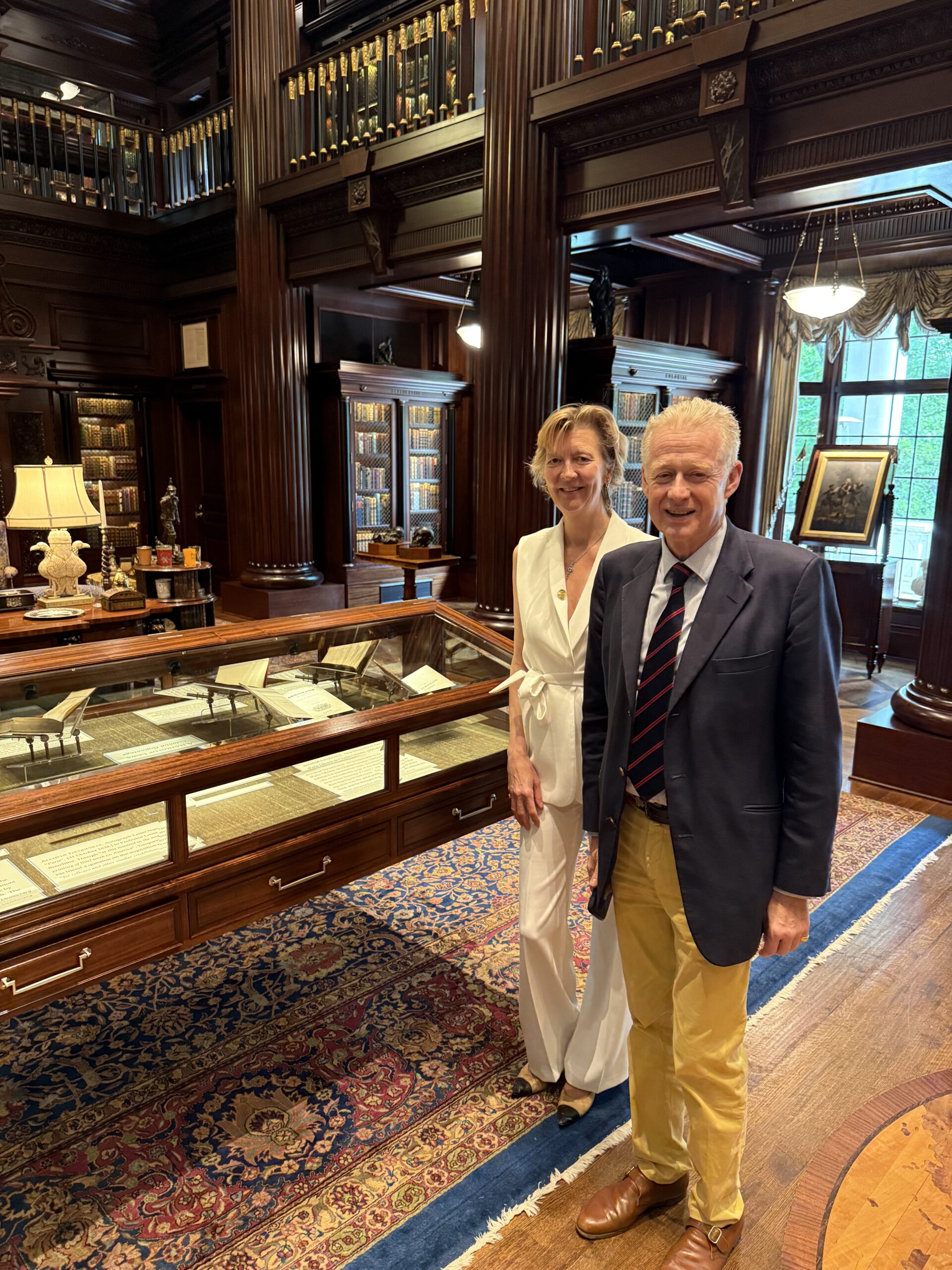
The Tocquevilles’ time in Dallas served as a powerful reminder of the enduring value of civic engagement and collective impact. During their visit, they explored several landmarks that make Dallas truly unique—including the remarkable Crow Library. The tour offered a glimpse into one of America’s most extensive private historical collections as well as the opportunity to lay eyes on documents penned by Alexis de Tocqueville himself. We are deeply grateful to the Crow family for sharing this exceptional cultural experience.

Thank you to everyone who made their trip a memorable one, including Mary McDermott Cook, Don and Carol Glendenning, Erin Nealy Cox and Trey Cox, Kathy Crow, Steven and Christy Williams, Ken Hersh and Regen Horchow, Ronit and Haviv Ilan, Vipin Nambier, Carol and Kevin March, Terri West and so many others who showcased American hospitality at its finest.

Kickoff JHS and chairs

(L to R) Jennifer Sampson, Steven Williams, Curt Farmer, Antonio Carrillo, Jim Burke

As we honor 100 years of service and look ahead to the future, this special visit stands as a shining example of what’s possible when community leaders—on both sides of the Atlantic—come together to build a more equitable world for all.

Join the Tocqueville Society

Become a Tocqueville Society member and help us drive lasting change in our community. Members enjoy exclusive Tocqueville events—including exciting Centennial year events—as well as advocacy and volunteer opportunities, family engagement and more.

Click here to learn more about joining the Tocqueville Society

Continue reading

100 Years Strong: Join United Way’s Centennial Celebration and Shape North Texas’ Future

To my fellow change-makers, 

As we continue to celebrate United Way of Metropolitan Dallas’ historic centennial year, I want to express my deepest gratitude to every individual, company and community partner who is helping to make our 100th year one to remember — and a powerful launchpad for our future. 

Steven Williams headshot
Steven Williams, CEO of PepsiCo North America and 2024-2025 United Way Campaign Chair

It’s my honor to serve as campaign chair during this once-in-a-lifetime moment. Thanks to your generosity, energy and commitment, we’re not just honoring a century of impact — we’re actively building the next one. And I invite all North Texans to be part of this milestone by donating, advocating and volunteering with us. 

United Way’s legacy is built on the belief that we can accomplish more together than we ever could alone. This year, that spirit of unity is stronger than ever. From bold new initiatives to neighborhood revitalizations and community-wide celebrations, we are driving real, measurable progress across education, income and health — the building blocks of opportunity. 

A centennial year that’s shaping our future 

This year is about more than celebration — it’s about accelerating change. 

We kicked off our centennial festivities last October with a community party that brought together partners and families from across the region. From there, the momentum continues to grow and grow. 

We launched the Data Capacity Building Initiative, equipping our nonprofit partners to more effectively collect and use data to amplify their impact and strengthen their services. Through the Aspire United 2030 Volunteer Series presented by Texas Instruments, we’re channeling the energy of thousands of volunteers into meaningful action: 

At the Food & Health Resources Fair, we connected thousands of neighbors with nutritious food and vital wellness services. 

On Reading Day presented by Atmos Energy, with honorary chair Charlotte Jones, chief brand officer and co-owner of the Dallas Cowboys, more than 1,000 volunteers inspired over 15,000 students across North Texas with the joy of books and learning. 

Our Thriving Neighborhoods initiative transformed 20-plus communities with over 500 volunteers planting trees, restoring parks and cleaning up shared spaces. This spring, we launched our work in Hamilton Park — a historic and resilient community — where volunteers from Texas Instruments, alongside neighborhood leaders and partners like the Dallas Wings and Texas Trees Foundation, came together to celebrate the neighborhood’s legacy and invest in its future. 

At Dallas College’s RedBird location, we established a new resource and workforce training hub, in partnership with Arcosa and the PepsiCo Foundation. Antonio Carrillo, president and CEO of Arcosa and United Way board chair, helped lead the ribbon cutting at this innovative new Workforce Center. The collaboration is part of United Way’s Southern Dallas Thrives initiative and directly supports the organization’s mission to advance education, increase income and improve access to health resources — the three pillars essential to creating the opportunity to thrive. 

Our centennial year has also seen advocacy in action, as we engaged hundreds of passionate advocates during the 89th Texas Legislature and led our largest-ever Texas United Way Capitol Day delegation. 

In partnership with Goldman Sachs, we hosted our most exciting year yet of The Pitch delivered by Amazon and the Social Innovation Summit, spotlighting bold, innovative solutions from local trailblazing entrepreneurs who are reshaping how we tackle community challenges. In conjunction with The Pitch, we released our Social Innovation 10-Year Impact Report, highlighting a decade of transformative progress driven by creative, community-based solutions. The energy, ideas and partnerships sparked in that room — and reflected in the report — remind us that real change starts with big vision. 

United, we create impact that lasts 

United Way of Metropolitan Dallas continues to change lives — not by working alone, but by bringing together people and partners from every corner of our region. Each year, our programs and investments improve the lives of nearly 1.7 million North Texans. This year is no different, with tremendous impact across our focus areas: 

In education: 

Building a strong foundation in early literacy and child development is critical to preparing children for success in third grade and beyond — a key milestone for our Aspire United 2030 goals. Through these initiatives, we’re ensuring that every child has the tools and support needed to thrive academically and in life: 

  • Once Upon a Month helps foster early literacy for tens of thousands of students. 
  • Programs like Texas Home Visiting and HOPES empower parents with tools to support early childhood development and build strong families. 

In income: 

Preparing young adults to earn a living wage — which is one of our Aspire United 2030 goals — starts with access to education, training and financial resources. Through these initiatives, we are building clear pathways to stable careers and long-term financial security, helping more North Texans achieve economic mobility: 

  • Pathways to Work gives thousands of job-seekers the training needed to launch careers in health care, IT and beyond — creating a ripple effect of financial stability across families. 
  • Through Dollars for College, we ensure more families can plan for brighter futures with new college savings accounts and growing deposits. 

In health: 

Building a healthier North Texas starts by ensuring every neighbor has access to nutritious food, affordable healthcare and the support they need to thrive. These initiatives drive measurable progress toward our Aspire United 2030 goal of promoting near-universal health coverage in our region: 

  • Our Food Access Summit, supported by Bank of America and the McKesson Foundation, brought attention and solutions to food insecurity in southern Dallas. 
  • Our Healthcare Navigators guided over 50,000 neighbors toward affordable health coverage. 
  • With support from the Kimberly-Clark Foundation, the Doorways to Health initiative improves maternal health outcomes by connecting vulnerable families to holistic, community-based care. 

We also opened an expanded Community Resource Hub at the Barack Obama Male Leadership Academy at A. Maceo Smith High School in southern Dallas — a vibrant, one-stop destination designed to connect families with vital education, income and health resources. As part of a network of hubs planned across North Texas, this initiative is a key part of our work to achieve our Aspire United 2030 goals: ensuring more students are reading on grade level, more young adults are earning a living wage and more North Texans are living longer, healthier lives. By bringing essential services directly into the community, we’re making it easier for families to access the support they need to build a strong, stable future. 

Honoring our partners in progress 

This year, we also celebrated those who make this work possible. We honored the enduring generosity of the Eugene McDermott Foundation and the inspiring philanthropic leadership of Carol and Kevin March, whose unwavering support strengthens our entire region. 

At our spring Tocqueville Society luncheon, we had the distinct honor of welcoming Jean-Guillaume and Stephanie de Tocqueville — descendants of Alexis de Tocqueville, whose name has come to symbolize a deep and lasting commitment to philanthropy and civic engagement. Their visit was a meaningful reminder of the legacy we’re carrying forward, and a fitting moment during our centennial year to reflect on the power of generosity to shape communities. 

Join our centennial celebrations and impact 

Our centennial year is proving what’s possible when North Texans unite — and we’re just getting started. A huge thank you to our Century Circle Sponsors — AT&T, Comerica Bank, Kimberly-Clark, Texas Instruments, Trinity Industries, Vistra and PepsiCo — who have helped to make this yearlong centennial anniversary as impactful as it has been meaningful. 

In the months ahead, everyone can be part of the excitement and impact by volunteering with us through the Aspire United 2030 Volunteer Series presented by Texas Instruments, advocating for meaningful change, and investing in our programs that make North Texas the best place to live, work and raise a family — for all. 

Change-makers from across North Texas can also join us as we make history. On Saturday, November 15, we’ll mark 100 years of life-changing impact with an unforgettable Centennial Celebration and Concert. This once-in-a-lifetime event will feature the vibrant Taste United Food Fest, powered by Vistra, and an electrifying concert experience presented by PepsiCo. It’s more than a celebration — it’s a bold statement about the future we’re building together. I invite community-minded corporations to join this historic celebration as sponsors — a rare opportunity to showcase your brand’s commitment to community and be part of a legacy one century in the making. Click here to explore sponsorship opportunities. 

Now is the time to get involved. United, we can create real, lasting change by building on the momentum of the past 100 years. Because we’re not just imagining a stronger North Texas — we’re building it.

Click here to give, advocate or volunteer. Whatever your passion, there’s a way to make a meaningful difference. 

With gratitude and hope, 

Steven Williams 

CEO, PepsiCo North America 

The Local Impact of the Federal Budget: What North Texans Need to Know

On Friday, June 6, United Way of Metropolitan Dallas hosted a Federal Budget Briefing Virtual Lunch & Learn to unpack how the federal budget reconciliation process could shape the future of critical services in North Texas. 

As Congress debates potential cuts to essential programs, we are closely monitoring how these decisions could impact our region—especially programs like Medicaid and the Supplemental Nutrition Assistance Program (SNAP), which provide vital support for healthcare and food access. Cuts in these areas would harm our neighbors and impede progress toward our community-wide Aspire United 2030 goals in education, income and health.  

The virtual event brought together policy experts to explore: 

  • The federal budget reconciliation process and what’s currently on the table 
  • The potential impact of proposed cuts to safety net programs like Medicaid and SNAP 
  • How these changes could affect the Texas state budget and local communities across North Texas 
  • Actionable ways to advocate for the protection of these essential programs 

Read on to learn more about the engaging briefing and what the federal budget process could mean for North Texas. 

Making Sense of the Local Impact of the Federal Budget 

Hillary Evans, vice president of Policy and Advocacy at United Way of Metropolitan Dallas, moderated the discussion. She opened the session by highlighting the deep connection between federal budget priorities and local policy outcomes. 

“No matter how you’re entering this discussion, there’s a lot of information and misinformation out there in this ever-changing federal policy landscape,” she said. “The purpose of this briefing is to inform and focus on what we can do. We will be providing an overview of the federal budget process and where we are currently in the process, developing a deeper understanding of how the federal budget affects Texas and our North Texas communities, particularly through an economic impact lens. And then we want to leave you with tangible ways to engage in advocacy and stay informed.” 

The event served as both an educational resource and a call to action, empowering attendees to stay informed and involved in shaping policies that directly affect the well-being of North Texans. It featured a panel discussion with some of our community’s leading change agents, each of whom have firsthand experience with how the federal budget cuts have impacted the community in the sectors of education, income and health: 

  • Daniel Bouton, vice president of health and wellness, United Way of Metropolitan Dallas  
  • Lynn Cowles, director of health and food justice, Every Texan 
  • Kelsey Mellette, director of federal policy and advocacy, United Way Worldwide  

View a video for the full event below, or read on for highlights from the Q&A. 

Insights From Local Policy Experts 

Hillary Evans: Kelsey, Congress is using budget reconciliation as a strategy to fast-track the “One Big, Beautiful Bill Act,” or the tax and spending plan that’s working its way through Congress. Could you level set us as to what budget reconciliation actually means and where things currently stand?  Also, how does President Trump’s proposed budget factor into the federal budget process? 

Kelsey Mellette: Budget reconciliation is a special legislative tool that can be used to fast-track high-priority legislation that changes spending, revenues or the debt limit. In practice, this means tax policies and changes to mandatory or entitlement spending, such as programs like Medicare, Medicaid and SNAP. Notably, budget reconciliation cannot be used for any changes to Social Security.  

In the Senate, reconciliation bills are not subject to the 60-vote threshold of typical legislation and instead can pass with 51 votes. That’s why it’s been a really appealing process when one party controls the White House, the House of Representatives and the Senate, but doesn’t have the full 60 votes in the Senate to pass legislation through the normal process. To get the process started, it’s a little technical, but the House and Senate agree to an annual budget resolution that sets their overall budget plan for the year. 

So talking about the fiscal year 2025 Bill, the one Big Beautiful Bill Act is really intended to be the centerpiece legislation of President Trump’s first-year agenda with a few goals: to reauthorize the 2017 Tax Cuts and Jobs Act, raise the debt ceiling, and increase defense and border spending. But I know we’ve heard a lot from our network on some of the key areas of concern from the budget. The president’s budget proposes to eliminate AmeriCorps funding and the entire Corporation for National and Community Service and then Head Start. Another cut that we’ve heard about from the network that I think folks are tracking is the cut to the maximum annual Pell Grant, which helps low-income students support post-secondary education. But the president’s budget is just a recommendation, and I encourage people to remember that Congress has the ultimate decision on what is funded and at what levels. 

Evans: Lynn, given your expertise in healthcare and food access, could you explain specifically how programs like Medicaid and SNAP could be affected in Texas? What would be the overall economic impact if these proposed cuts go through? 

Lynn Cowles: The effects that we’ll see in coverage in Texas are vast, and because Medicaid is a complicated program, they extend into many different populations and in many different ways. The first thing that I wanted to cover, in case anyone is not totally steeped in this world, are some of the key programs that we’re going to see cut by these budget proposals. So, Medicaid is a no-cost healthcare program for low-income children, for seniors, for disabled people and for pregnant people in Texas.  

There are some things that the federal government requires Medicaid to cover. Right now, there’s not a whole lot in the bill that tries to make changes to coverage services, but some services that are covered by Medicaid are optional in states. Medicaid covers primary care and specialist care. If a kid needs to go get an injury checked out and then they need to see a radiologist for an x-ray and then maybe they need to see a dentist, all these things are covered by Medicaid, but dental care is actually like an option. So, states opt into dental care. If the federal government takes money away from the Medicaid program, then states have to deal with that somehow. And oftentimes states will cut optional programs to deal with the lack of funding that’s coming from the federal government when we see cuts like this. 

But we have never actually seen cuts like this before, so we don’t know yet and state lawmakers don’t know. And we’re all waiting to see what happens with the Senate, how reasonable senators are actually going to be with the level of these devastating cuts that they feel comfortable with in thinking about their constituents, and whether or not state lawmakers are going to have to cut things like kids’ dental care or nursing home care for seniors or long-term services and supports like in-home assistive devices for people with disabilities and whatnot. So, these are just some of the big things that Medicaid covers for folks in Texas. And all of these things are at threat with budget cuts this big.  

SNAP is also called food stamps. These are direct dollars. It’s a bit easier to explain the federal cuts to SNAP because basically what the federal government is suggesting is to reduce the amounts that the federal government sends to states to put onto people’s Lone Star cards or to provide direct dollars for people to spend on food. 

So what we’re talking about here is just less money for food, not like program cuts, not service unavailability or anything. So SNAP cuts are much more direct. And so we’ll talk about how the messaging differs a little bit or how we can think about these things when we’re really trying to get to our lawmakers and say, “Look, this is going to affect your community and people are going to suffer.” 

The SNAP cuts are really important. The Affordable Care Act cuts are really important. Those are also dollars sent from the treasury to people who get health insurance in Texas. If we lose those dollars, then fewer people will be insured. Medicaid in the children’s health insurance program is already really, really lean. In Texas, we don’t cover as many people as other states cover because the Texas legislature has never expanded Medicaid eligibility to low-income adults. And that is a key population that a lot of these federal budget cuts are targeting right now. Because Texas never opted into the availability of Medicaid for low-income adults, that population has never had Medicaid in Texas, so they’re not at risk of losing it like they are in other states. 

Evans: Daniel, could you discuss some of the healthcare access programs that United Way of Metropolitan Dallas supports? 

Daniel Bouton: United Way of Metropolitan Dallas has several programs, but I’m going to talk to you about Healthcare Navigator, which is federally funded and works to increase access to healthcare and healthy food in 16 counties in North Texas. So, when we talk about the impact these funding cuts would make in communities, it’s just huge. Our funding comes from the Affordable Care Act, and this federal funding allows United Way to hire, train and deploy Healthcare Navigators into communities that are in critical need to receive these services. Our navigators walk individuals and families through the healthcare options. They not only explore the health insurance options, help them apply, help them walk through the complexities of the application, but also help them apply for SNAP. I know that we’re talking about SNAP and how it cuts would impact our communities. Our navigators really, really take the time to complete these applications to make sure that the documentation that is necessary for the application to go through and approve it is completed the right way. 

Evans: Daniel, how can this work continue in terms of being able to navigate around these cuts? It’s obviously going to look different. 

Bouton: I think that there are many things we can do to continue the work. It is with conversations like this one, how do we engage, how do we get involved, how do we advocate for programs like Healthcare Navigators and how do we speak up to stop some of these funding cuts that we know are critical. 

Let’s just talk about real-life impact. So, as we reach out to our legislatures to talk about this, let me just talk to you about SNAP and the consequences of these cuts. We know that SNAP and WIC are critical lifelines for millions of people in Texas. Our children are going to skip meals or rely on cheaper, unhealthy foods. Our parents are going to skip meals because we need to feed our kids. We know that students are going to struggle academically. We know that a child who is hungry is not going to perform the same way. We also know that food insecurity will lead to chronic stress and health issues. The USDA’s latest study tells us that the average SNAP benefit is around $6.10 per person per day. So, let’s just talk about a 10% funding cut. What does that mean? It means that a family loses about $74 a month. That is huge for a family. That is $74 less to be able to buy healthy food. Households then are forced to buy cheaper or less healthy food. Recent research from Harvard says that people who have access to less healthy food see higher future healthcare costs. So that is $1,400 more per person that we will spend on their health. So again, just giving you the consequences of these funding cuts and then quantifying the economic impact. 

Add to Your Advocacy Toolbox 

Interested in ramping up your advocacy efforts this year? Check out these resources for additional information:  

 Advocate with Us 

Whether you are part of a North Texas nonprofit or simply a community-minded resident, we invite you to advocate with the Live United network. When we speak up, united, we have the power to drive lasting change in our community. 

Sign up for our Advocacy Alerts, and we’ll let you know how and when to contact your representatives to have the biggest impact possible. 

We’re Empowering Nonprofits to Leverage Data to Take Their Impact to the Next Level

On June 11, United Way of Metropolitan Dallas welcomed funders, partners and community leaders to Pegasus Park for a powerful presentation highlighting the transformative impact of the Data Capacity Building Initiative (DCBI)—a cornerstone of United Way’s Second Century Project. 

As we mark 100 years of community change in North Texas, the DCBI is launching us into our second century of impact by creating a multiplier effect on United Way programs and partnerships. 

By equipping community-based organizations with the tools and knowledge needed to analyze local challenges and develop sustainable, collaborative solutions, the initiative is creating a groundswell of progress toward our community-wide Aspire United 2030 goals in education, income and health.  

“This initiative is about democratizing data—putting powerful analytical tools in the hands of those who are closest to our community’s challenges and combining the data science with structured capacity building, technical assistance and ongoing support,” said Jennifer Sampson, McDermott-Templeton president and CEO of United Way of Metropolitan Dallas. 

Data Drives Lasting Community Change 

The recent DCBI event was led by United Way Centennial Advisory Council co-chairs Katie Robbins, president and CEO of The Hoblitzelle Foundation, and Andy Smith, director of Giving and Volunteering at Texas Instruments and executive director of the TI Foundation. The presentation spotlighted how 12 community-based organizations are using data to drive measurable change across North Texas.

The first cohort of the DCBI included: 

  • Beacon Hill Preparatory Institute 
  • Boys & Girls Clubs of Greater Dallas 
  • Black Heart Association 
  • Communities In Schools of the Dallas Region 
  • Empowering the Masses, Inc. 
  • Families to Freedom Inc. 
  • Lone Star Justice Alliance 
  • Miles of Freedom 
  • New Friends New Life  
  • T.R. Hoover Community Development Corporation 
  • The Concilio 
  • Youth With Faces – Youth Village Resources of Dallas, Inc. 

Attendees were treated to a dynamic panel discussion featuring representatives from the inaugural DCBI cohort, who shared firsthand how the initiative has helped them turn data into actionable insights—improving services, expanding reach and deepening their impact. 

The event also featured highlights from the DCBI program and the Community Vulnerability Compass (CVC), developed in collaboration with the Parkland Center for Clinical Innovation, our external Aspire United 2030 evaluator.  

The CVC is based on the Healthy People 2030 framework, a national health promotion and disease prevention initiative aimed at improving the health and well-being of all Americans. It includes 27 clinical and socio-economic indicators that highlight the health, resiliency and economic vibrancy of neighborhoods, which, leveraged together, provide micro-level, hyper-local data to identify areas of greatest need and inform targeted interventions. 

At United Way, the CVC enables us to target our community investments more strategically. And, since launching the DCBI, the tool is also equipping community-based organizations with the resources and knowledge needed to analyze local challenges and develop sustainable, collaborative solutions, empowering them to better understand community needs and respond with precision and purpose. 
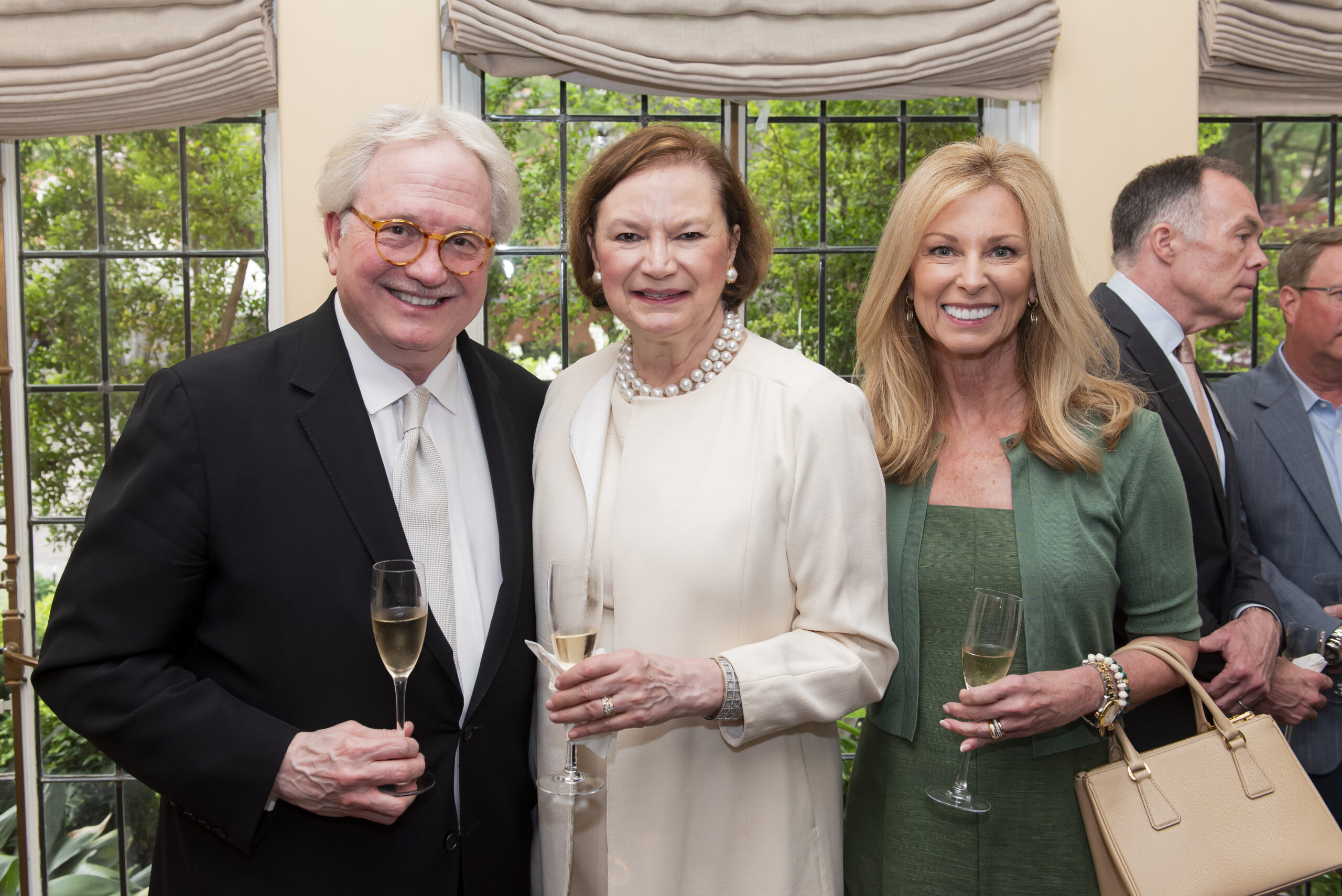
Accelerating Progress—Together  

Destiny Davis, senior director of the DCBI at United Way of Dallas, said, “We’re proud of the progress made by the first cohort of the DCBI. We’re confident that by empowering grassroots community organizations with data, we will continue to create greater impact across North Texas over the six-year initiative” 
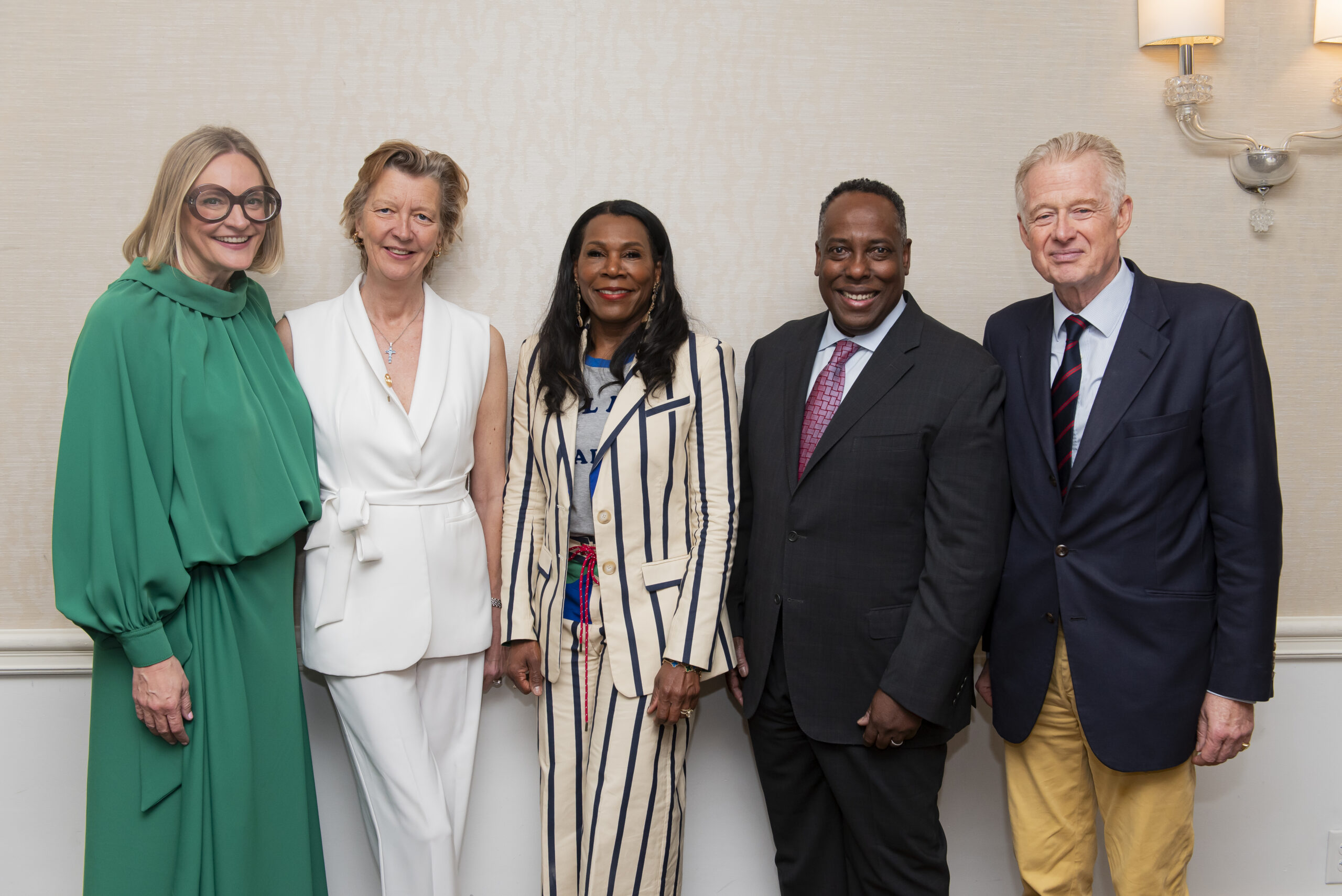
Together with our supporters and community partners, we’re driving progress through initiatives like the DCBI to ensure: 

  • Every child begins school ready to learn and graduates from high school ready for success  
  • Everyone has the skills and resources needed to get and keep a good paying job  
  • Every neighbor has access to the healthcare needed to live longer, healthier lives 

Special thanks to the funders who made this initiative possible: The Addy Family Foundation, Communities Foundation of Texas, The Lyda Hill Foundation, The Meadows Foundation, The Eugene McDermott Foundation, The Rose Family Foundation, The Hoblitzelle Foundation and the Texas Instruments Foundation. 

Together, we’re proving that data isn’t just numbers—it’s a catalyst for change.

Invest in Our Data-Driven Community Impact Work  

As United Way enters its second century, the path forward is clear: We must continue building strong partnerships and leveraging innovative tools to create lasting, transformational change in North Texas.   

We invite you to join the forward-thinking organizations that have invested in our Century Project, the Data Capacity Building Initiative. Together, we can expand our proven, data-driven community impact strategy and our use of local data to develop collective solutions for our community.   

Click here to invest today. For more information, contact Susan Hoff at shoff@unitedwaydallas.org.