
Author: Meg Costa

6 Ideas for Preventing Evictions in a Post-COVID World

In the years since COVID-19 hit North Texas, United Way of Metropolitan Dallas has worked with civic, corporate and community partners to provide support to our neighbors facing the threat of eviction. However, now that the worst of the pandemic is behind us and federal eviction protections have expired, the rate of evictions is once again on the rise.

Eviction prevention is a key component of our work to prevent homelessness and encourage financial stability. We recognize that a stable home environment is foundational to our three focus areas—education, income and health. That’s because without a safe, comfortable place to live, children are less likely to succeed in school, adults often struggle to maintain steady work and families face greater threats to their physical and mental health.

Through the Dallas Rental Assistance Collaborative, the Targeted Eviction Prevention Program, advocacy work and other initiatives, United Way brought the community together to support thousands of families through the height of the pandemic, helping to prevent an eviction crisis in our communities.

As we look ahead, it’s important that our community unites once again to encourage housing stability on an ongoing basis. Working with other members of the Dallas-Area Eviction Prevention Task Force, our team has developed a set of recommendations for ongoing eviction prevention efforts across North Texas.

Our Recommendations for Preventing Evictions

In a new report, “Recommendations for a Permanent Eviction Prevention Infrastructure,” United Way and our partners detail a series of steps that our community can take to ensure more families can stay in their homes.

The recommendations cover several high-level elements of eviction prevention, including:

  • Give tenants opportunities to access rent relief.
  • Provide legal aid to tenants facing eviction cases.
  • Ensure tenants can easily access eviction navigation and other resources.
  • Improve data gathering and sharing to infuse more transparency in the eviction process.
  • Adjust eviction policies to give renters an “opportunity to cure” back-rent and to protect tenants who have resolved an eviction case.
  • Create a tenant education program to ensure renters know their rights.

In the full report, we explore how to best achieve these goals and which agencies would need to be involved.

Of course, making these recommendations a reality would take time and community-wide buy-in. However, we saw during COVID that eviction prevention measures such as these have a profound impact on people’s lives, enabling children to stay in their schools, empowering parents to maintain steady work and creating a more stable, healthier environment for all.

Read the Full Report

Click below to read the report with our full recommendations for sustaining a local eviction prevention infrastructure to minimize housing instability and prevent homelessness:

Download “Recommendations for a Permanent Eviction Prevention Infrastructure.”

Raising Awareness of Texas’ Dire Maternal Health Statistics

Across Texas, maternal health has become a crisis. New mothers are dying at a shocking rate in our state, and it’s vital for all of us to do everything in our power to reverse this trend.

At United Way of Metropolitan Dallas, we drive transformative change in the areas of education, income and health—the building blocks of opportunity. One of our Aspire United 2030 goals is to increase to 96% the percentage of North Texans with access to affordable health insurance. An urgent component of that work involves raising awareness of harmful health disparities, providing new moms and mothers-to-be with the resources necessary to thrive, and advocating for legislation that expands healthcare access and brings greater equity to maternal healthcare.

Read on to learn more about the state of maternal health in Texas, to hear about the experience of one local mom and to discover how United Way works to improve maternal health in our communities.

Maternal Health Is in Crisis

The United States is failing mothers who are about to give birth or who are postpartum. Our country has the highest maternal death rate among similarly developed countries and is the only industrialized nation where such deaths are rising.

Black mothers fare the worst of any ethnic group in this country. In 2020, the maternal mortality rate for Black women was three times the rate for white women. The high rates of maternal mortality among Black women span across income level, education level, socioeconomic status, general overall health, access to prenatal care and mental health status.

According to the CDC, multiple factors contribute to these disparities, including:

  • Lower quality healthcare
  • Structural racism
  • Implicit bias from healthcare providers
  • Underlying chronic conditions

The situation is even more dire in Texas, which is the state with the highest Black maternal mortality rate. That number has now risen to 117.3 deaths per 10,000 delivery hospitalizations.

Mothers of color in our state face barriers to quality care that most of their white counterparts have never experienced. Research from the Kaiser Family Foundation shows that Black patients are more likely to feel that a healthcare provider doesn’t believe their symptoms or pain level. Black women typically begin receiving prenatal care much later in their pregnancy—if at all. Meanwhile, patients of color are also significantly more likely to experience mistreatment, such as shouting or scolding, ignoring or refusing requests for help.

A North Texas Mom Tells Her Story

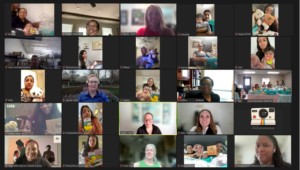
To commemorate Black Maternal Health Week, United Way hosted a Black Maternal Health Lunch & Learn on April 14 for community partners, government agencies and local parents to learn more about this important issue.

During the event, one inspiring North Texas mom shared her story of navigating the healthcare system while pregnant. As a first-time mom, Lasean accessed services and resources through our partner Abide Women’s Health Services, which offers culturally informed prenatal and postnatal care. She was also seen postnatal by a nurse with our partner Metrocare Services.

“I was pregnant and new to Dallas, and I had no idea what resources were around me,” Lasean shared. “I was terrified of hospitals, because of all the disparities and the horror stories that you hear about women of color. So I Googled ‘prenatal care POC near me’ and that’s how Abide showed up on my radar.”

Lasean said the first time she visited Abide, she immediately felt comfortable and safe.

“I felt confident in a place where I could just be a pregnant person of color,” she said. “They were very informative and always checked on me. Our visits were very cultural; we understood each other in ways that I wouldn’t have gotten in traditional care. [My doula] understood my preferences and my natural birth plan, and she supported everything that I wanted to do. Being around women who look like you, who have done the things you’ve done…[it] boosted my confidence that I could actually be a mom. It’s very communal and you feel very supported.”.

Lasean also told her harrowing story of giving birth. She had made her birth plans at a Dallas-area birthing center, but things quickly went off course once she started feeling contractions and rushed with her partner to the center. Although she was in labor, the doctor told her to go home and wait until she was further along. On her way home, she had to sit in rush-hour traffic for an hour.

“To me, they didn’t do their jobs. And within 30 minutes of getting home, I had my baby in the bathtub,” she said. “With no medical supervision—nothing. It blows my mind to this day. Luckily there were no complications, no issues. But the flipside to that trauma is that anything could have happened to us.”

Lasean’s experience illustrates how traditional healthcare providers can so easily discount the needs of moms of color, which can lead to dangerous, and even deadly, consequences.

Working Together to Improve Maternal Health

At United Way of Metropolitan Dallas, we recognize that maternal mortality is unacceptably high in Texas, but it doesn’t have to be that way.

“One of the things that stood out for us is that 90% of pregnancy related deaths are preventable,” said Nailah Johnson, director of the Texas Home Visiting Program at United Way of Metropolitan Dallas. “So, we’re really focused on catching those mamas in that prenatal stage to ensure that they have the support they need. Our goal is to share and understand these disparities and inequities that are occurring in Dallas County and work with our partners in the community to provide the services and resources that families in North Texas need to thrive.”

United Way leads and collaborates on several initiatives that support improved care for moms and moms-to-be in North Texas. This work includes:

  • Doorways to Health: This partnership with Abide Women’s Health Services and Metrocare Services seeks to improve the maternal health outcomes of women in Dallas. Doorways to Health offers a variety of resources and programming, including home visiting and holistic maternal healthcare services, to ensure new and expecting mothers have the support necessary to thrive.
  • Family Wellness Council: This collaborative partnership works to ensure a strong start for all families living in North Texas. The council engages multiple sectors across North Texas to focus on improving health equity and providing high-quality support for parents and healthcare providers. The council includes the Help Me Grow North Texas and Health Initiatives Workgroup, which includes about 25 nonprofits serving local families.
  • Advocating for expanded healthcare coverage: Notably, more than half of maternity-related deaths in the U.S. happen in the 12-month postpartum period, which indicates the importance of postpartum health coverage. Securing 12-month health care coverage for new moms is part of our goal to ensure that all our neighbors have access to the resources needed to live longer, healthier lives. During the current Texas legislative session, we signed on to back a bipartisan bill (HB 12) that would allow moms to keep Medicaid insurance for one year after pregnancy or miscarriage, instead of just two months. We also support HB 2873, which requires the state to develop a strategic plan for improving maternal health outcomes under programs administered by the state to women during and following pregnancy.

Let’s Support Improved Healthcare for Pregnant Women

Join our community-wide effort to improve access to healthcare in North Texas. Here are two ways to get involved right now:

  • Advocate for pregnant women. During this year’s legislative session, United Way is working with hundreds of advocates to speak up and speak out on important policies that directly impact North Texans. With HB 12 and HB 2873 being considered, now is the time to contact your representatives. Sign up here to receive our Advocacy Alerts, and we’ll let you know how and when to contact your lawmakers to make the biggest impact possible.
  • Make a donation to support programs that improve access to healthcare. When you invest in United Way, you create lasting change right here at home. Your donation will support programs like Doorways to Health and ensure all North Texas families have the opportunity to thrive. Click here to invest today.

Together, We’re Improving College and Career Readiness in North Texas

It’s graduation time across North Texas, as tens of thousands of high schoolers get ready to head to college or join the workforce. Although this milestone brings plenty of excitement, for today’s graduates it’s also a time of anxiety. Facing a tight labor market, rising college tuition and the possibility of a recession, many students understandably feel uncertain about their future.

College and career readiness is an important concept for individual students and for our community as a whole. At United Way of Metropolitan Dallas, we recognize that to achieve our mission of improving access to education, income and health—the building blocks of opportunity—we must make college and career readiness a top priority. That’s why we lead and invest in programs that deliver the knowledge and skills that students need to succeed in life after high school.

Read on to learn more about the importance of college and career readiness, some of our programs that prepare students for the future and ways you can get involved in this important work.

What does college and career readiness mean?

High school graduates are considered college or career ready when they have the skills and knowledge necessary to succeed at a two- or four-year college, in technical school, or in a job. This level of preparation doesn’t happen overnight—and it takes the support of teachers, parents and the community.

Research indicates that the seeds of college and career readiness begin from a young age and continue throughout elementary, middle and high school.

“It takes a significant amount of guidance and support for a student to have the knowledge and abilities to succeed after high school,” said Cathy Lee, director of educational career success at United Way of Metropolitan Dallas. “And it’s not just about parents, teachers and community organizations ensuring children have book smarts. From an early age, students also need to learn about and be exposed to different college and career options, internships, mentorship and other resources that illustrate the various paths they could take after graduation.”

The Importance of College and Career Readiness

As the cost of college tuition rises and the job market fluctuates, it is as important as ever for young people to develop the skills necessary to succeed after high school—and to understand the many different opportunities they have to thrive. Being college- or career-ready has the power to impact the rest of a student’s life, affecting everything from healthcare access and financial stability to overall quality of life.

“We know that when students are empowered with a strong education, they are more likely to go on to achieve financial stability, which also supports a lifetime of good health,” said Jennifer Sampson, McDermott-Templeton president and CEO of United Way of Metropolitan Dallas. “These three building blocks of opportunity—education, income and health—are the foundation that enables our neighbors in North Texas to thrive.”

The stakes are also high for our community, because college and career readiness directly impacts our region’s workforce and economy.

Local Students Require Support to Truly Thrive

Unfortunately, only about 30% of North Texas students are graduating high school prepared for college or a career. Rates of college readiness are significantly lower for Black (15%) and Latinx (17%) students compared to their white peers (42%).

For many North Texas students, these challenges begin well before high school. Research has shown that students who are both not reading proficiently by third grade and living in poverty are 13 times less likely to graduate from high school on time compared to their proficient, more affluent peers.

This lack of preparedness can have a huge impact on a graduate’s future financial security. Today, 74% of young adults in North Texas don’t earn a living wage. Without that basic level of financial stability, our young neighbors often struggle to pay bills and rent, afford quality health insurance and support their families.

When a large percentage of high school graduates aren’t college- or career-ready, our region feels the effects. Today 85% of good-paying jobs in North Texas require education beyond a high school diploma, but only 30% of local students are prepared for college or career training that will qualify them for these jobs.

For our region to continue its economic success, it needs a skilled workforce that is prepared for the jobs and demands of today’s global economy. And the workforce must include a steady pipeline of qualified workers for our most in-demand careers, such as those in healthcare, IT and construction.

To ensure local students are prepared to succeed in college or a career, we as a community must invest in initiatives that give young students a strong start in school, better prepare graduates to earn a living wage and help build a stronger workforce.

United Way Prepares Students to Succeed

Part of our work to improve access to education, income and health involves creating and investing in programs that give students strong pathways to financial security, while also enabling young adults to get and keep better jobs.

One of our Aspire United 2030 goals—our 10-year roadmap for driving transformational change in North Texas—is to increase by 20% the number of young adults in North Texas who earn a living wage. This type of progress won’t only benefit individuals; it will have an enormous impact on our region’s economy and workforce, adding nearly $800 million in wages every year.

Understandably, most students don’t intuitively know what they want to do with the rest of their lives. At such a young age, they need exposure and access to the relevant skills, experience and connections that will equip them for a living wage job with career advancement—helping to ensure long-term financial stability and economic mobility.

“Our programs and partnerships take a holistic approach that enables students to prepare academically, develop social and emotional skills to ensure well-being, and connect with mentors and resources so they graduate ready for the professional workplace,” said Greg Mangum, vice president of economic mobility at United Way of Metropolitan Dallas. “

A variety of United Way initiatives directly impact college and career readiness, including:

  • Digital Connections, a partnership with AT&T, which provides families in Southern Dallas neighborhoods with free laptops, digital literacy training and technology support, encouraging students to engage in online learning and setting them up for success in today’s digital school and job environments.
  • Dollars for College, a partnership with Communities Foundation of Texas, which provides easy, low-cost college savings accounts for low-income North Texans, significantly increasing the odds of students attending and completing college.
  • Once Upon a Month™, a partnership with The Ferst Foundation for Childhood Literacy and Boone Family Foundation that delivers age-appropriate children’s books to children every month to encourage language development and spark a love of reading. (It’s never too early to prepare a child for college or a career; in fact, researchers have found that children reading on grade level by the end of third grade are five times more likely to be college or career ready than their peers who aren’t reading proficiently.)
  • Start Smart Texas, a free text service that gives busy parents the tools they need to be confident first teachers for their children, including information on child development, social-emotional learning and other skills that help them succeed in preschool, kindergarten and early grades.

Two Ways to Support College and Career Readiness in North Texas

United Way of Metropolitan Dallas invites all of North Texas to work together to support college and career readiness, both during graduation season and throughout the year.

  • Volunteer: This May, we have two volunteer opportunities that directly encourage college and career readiness, including a career attire drive and a networking event for high schoolers. Sign up here.
  • Invest in lasting change: Make a donation to United Way of Metropolitan Dallas to support initiatives that encourage student success at every grade level, prepare high schoolers for life after graduation and expose young workers to career opportunities. For example, a $50 contribution to Dollars for College seed one college savings account for a local student, opening the door to college success, better job opportunities and greater economic mobility. Click here to make your donation now.

Your Guide to Voting in the May 6 Election

Calling all change-seekers: North Texas has an important election coming up on Saturday, May 6 that could have a significant impact on education, income and health in our community. This year’s election includes key local positions, such as city council seats, that have a direct impact on public policy in North Texas.

You can participate in early voting starting Monday, April 24 through Tuesday, May 2. If you plan to vote by mail, check out the rules on applying and submitting your mail in ballot (see below).

Read on for details about what’s on the ballot, key dates, how to vote and more.

The Importance of Voting in Every Election

At United Way of Metropolitan Dallas, advocacy is an important part of the work we do to improve access to education, income and health in North Texas. However, contacting your elected officials isn’t the only way to make your voice heard. It’s also vital to vote in every election—even local elections, like this year’s.

Voting is one of the simplest, yet most powerful duties we as citizens hold. It’s important for all of us to be informed voters. Many people only vote during presidential election cycles; however, the power is truly with the people—every election.

Your vote has the power to drive positive change on the big issues right here in North Texas, including our key focus areas of education, income and health. By voting, you are helping determine the elected officials who will prioritize how government funding will be allocated and make decisions that impact your daily life and the long-term viability of our community, like how our schools are run.

What’s On the Ballot

There is a long list of offices on the ballot, including city council, school district trustee, community college trustee and more.

To see what is on your local ballot and to create a customized sample ballot, visit Vote411.org.

Key Dates

  • Apr. 24-May 2: Early voting (in-person). Dates and hours vary depending on where you live. Check your county’s election department website—Dallas, Collin, Rockwall or Denton—for dates, hours and locations.
  • Apr. 25: Last day to apply for ballot by mail (must be received, not postmarked, by this day)
  • May 6: Election Day and your last chance to vote.

Please note: The deadline to register to vote in the May 6 election has passed; it was April 6.

Other Things to Know

Don’t forget to bring a photo ID to your voting place. You must present one of the seven acceptable forms of photo identification before you can vote:

  • Texas driver’s license
  • Texas election ID certificate
  • Texas personal ID card
  • Texas handgun license
  • U.S. citizenship certificate with photo
  • U.S. military ID card with photo
  • U.S. passport (book or card)

Your voter registration card is not mandatory to vote, but bring it if you have it. If your name is spelled differently on the official list than on your ID, showing your registration card may resolve the issue.

Voting locations: Polling locations may be different for early voting and Election Day, so visit your county’s election website—Dallas, Collin, Rockwall or Denton—to make sure you’re headed to the right location.

Be an educated voter: Save yourself time at the polls by being prepared. Do your research on the candidates and the responsibilities of each office before getting to the voting machine. You can bring a list of how you want to vote, as long as it’s not a partisan flyer. To learn more about the candidates, visit Vote411.org.

Encourage your network: Make a plan to vote, and invite your neighbors and friends to go vote with you.

Vote by mail: To be eligible to vote early by mail in Texas, you must meet at least one of the following criteria:

  • Be 65 years old or older
  • Be disabled
  • Be out of the county on election day and during the period for early voting by personal appearance
  • Be expected to give birth within three weeks before or after Election Day
  • Be confined in jail, but otherwise eligible

Instructions on how to apply for a mail-in ballot and how to track your completed ballot can be found on the Texas Secretary of State’s website. The mail-in ballot application has changed so make sure you thoroughly read the instructions.

Be a Part of Our Advocacy Work

If you’re not already advocating with us during the Texas Legislature’s 88th session, we invite you to join us in speaking up and speaking out on the policies that matter most to our community. This session, hundreds of North Texans have been a part of our advocacy efforts, and this work is having a real impact on lawmakers.

Sign up for our Advocacy Alerts, and we’ll keep you up to date on current policy priorities and send you notifications on when and how to contact your elected officials.

Go In-Depth on Our Legislative Priorities: Investing in Education, Income and Health

This legislative session, Texas has a $32.7 billion budgetary surplus, which presents a unique opportunity to invest in Texas families. United Way of Metropolitan Dallas is asking legislators to prioritize budgetary increases to vital programs that support systemic improvements in education, income and health.

Two of our key budget requests are funding 211 and investing in child abuse prevention.

Background on 211

211, the Texas information and referral network, is a public-private partnership that connects Texans to local health and social service agencies. Despite having no significant funding increases over the last 14 years, 211 has experienced an overwhelming increase in call volume, often 30% to 40% above historical numbers. 211 Texas also struggles to keep up with increased operational costs and technological demands.

Other states have used 211 funding increases to broaden their community-based resource database, improve technology and utilize caller data to identify resource gaps. We are asking for a minimum $4.6 million/biennium increase in the base budget for 211. This would allow call centers to attract and retain quality staff, maintain operations, and enhance technology and communication.

Learn more about the importance of 211

Background on Child Abuse Prevention

Child abuse costs Texas billions annually in criminal justice, healthcare, social services, education and lost workforce productivity. However, child abuse prevention only accounts for 5% of child welfare spending statewide.

Home visiting is an evidence-based child welfare tool that brings social workers, nurses and child specialists to new and expecting mothers to promote healthy families and reduce the use of emergency care for mothers and babies. 98% of families participating in home visiting programs do not have a substantiated child abuse report within five years of receiving home visiting services. While home visitation is proven to prevent child maltreatment, only 3.8% of eligible families have access to these programs.

We are calling on Texas legislators to fully support the Texas Department of Family and Protective Services’ exceptional item No. 2 to “strengthen services for prevention services by $87.8M GR/$87.9M AF and 20 FTEs for the biennium” so an additional 15,000 to 20,000 families would be served each year by these valuable programs.

Learn more about home visiting programs

Progress on Our 2023 Legislative Priorities

We’re two-thirds of the way through the 88th Texas Legislature and at a key juncture for our legislative priorities. In a few short weeks, bills will start dying if they have not passed important milestones, like getting voted out of committee or placed on a calendar.

We want to provide you with an update on our top priorities this session—including the bills you have taken action on—so you have a better idea of how much further they must go in the next 45 days.

Housing Stability for Low-Income Workers

  • HB 1450 (Collier): Seeks to seal an eviction record for tenants who have won or had their case dismissed. Status: This bill received a hearing in the House Business & Industry Committee but was left pending. A similar Senate version (SB 1822) has not received a hearing.
  • SB 1925 (Springer)/HB 3591 (Shaheen): The initial version had a section that would have scaled back low-income housing tax credit (LIHTC) affordability requirements from 45 years to 30 years. Status: We have heard that the bill authors are removing the section the reduces the minimum affordability years.
  • SB 986 (Creighton)/HB 2035 (Slawson): Prohibits local governments from impeding the eviction process, which would eliminate Dallas’ eviction notification ordinance. Status: Both bills have received a hearing and were left pending. United Way of Metropolitan Dallas and our allies are asking the authors to accept an amendment that would give tenants a seven-day window to resolve the lease violation.

To learn more about these issues, read our blog on eviction sealing.

Expand Child Abuse Prevention Programs

  • SB 24 (Kolkhorst): Reduces the state’s focus on child abuse prevention by expanding prevention and early intervention goals to include increased workforce participation, reduced reliance on public assistance and promotion of marriage. The new program would move child abuse prevention programs from the Department of Family and Protective Services to the Health and Human Services commission. It would also establish a statewide network of pregnancy support centers, adoption assistance providers and maternity homes, further diluting the goal of preventing child abuse. Status: The bill was voted out of the Senate and has been referred to the House Human Services Committee.

Increase Access to School-Based Mental Health Services

  • HB 1571 (Lozano): Allows school districts to get reimbursed by Medicaid for mental health services provided to Medicaid-eligible students. Status: The bill received a hearing in the House Human Services Committee but was left pending. The Senate version has not received a hearing.

To learn more about this issue, read our blog on school-based mental health services.

Protecting Payday & Auto-Title Lending Ordinances

  • SB 149 (Springer): Prohibits municipalities from creating ordinances that regulate local commercial activity, including payday and auto-title lending ordinances. Status: This bill received a hearing in the Senate Business & Commerce Committee but was left pending.
  • HB 2127 (Burrows)/SB 814 (Creighton): Prevents municipalities and counties from adopting ordinances that affect state agriculture, finance, insurance, labor, natural resources or occupations codes and allows any person affected by these ordinances to sue the municipality, county or official. Status: The House version was voted out of the House State Affairs Committee and is heading to the Calendar Committee, which is chaired by the bill’s author. The Senate version was left pending after it received a hearing.

To learn more about this issue, read our blog on payday and auto-title loans.

Modernize 211

  • HB 2473 (Bucy): Would modernize 211 Texas, which connects North Texans to local health and social service agencies. Status: This bill unanimously voted out of House Human Services Committee and is getting sent to the House Calendar Committee, who will determine if it gets placed on a House calendar.

To learn more about this issue, read our blog on modernizing 211.

Public Transportation

  • HB 4846 (Davis): Requires metropolitan planning organizations, such as DART, to consider the needs of individuals that are disabled and those that are participating in Texas Workforce Commission workforce training programs before they receive funding from the Department of Transportation. Status: The bill has not received a hearing in the House Transportation Committee

To learn more about this issue, read our blog about access to public transportation.

Go In-Depth on Our Legislative Priorities: Modernize the 211 Referral Helpline

211 is an important community resource that can be particularly useful for our low-income neighbors. However, the service has been underfunded for years. During the 88th Texas Legislature, we’re supporting a bill that would invest funds to modernize and update 211 to meet North Texans’ current needs.

Background on 211

The 211 information and referral helpline is a federally designated dialing code – like 911 or 411 – that refers callers to local health and social service agencies. In Texas, community-based organizations, including local United Ways, operate many of 211’s call centers. 211 Texas is unique in that it is one of the only 211s in the country to be managed, operated, and funded by the state government.

Challenges within the 211 Texas system pose obstacles for Texans seeking assistance and put strains on community organizations managing the network. Funding for 211 Texas has remained relatively level for nearly 14 years despite increased call volume, operational costs, and contract expectations from the Texas Health & Human Services Commission.

These constraints prevent Texas 211 from meeting the standards of other state 211s, including broadening their community-based resource database, improving technology, and utilizing caller data to identify resource gaps.

What’s Happening This Legislative Session

In addition to the proposed increase to 211’s base budget, United Way supports House Bill 2473 (Bucy), which would improve 211 Texas’ services to meet the caliber of other states.

Learn more about 211.

What’s New

We’ll be watching this legislation throughout the session. Check back here for important updates as this bill advances through the legislative process.

Go In-Depth on Our Legislative Priorities: Access to Public Transportation

Public transportation is vital for Texans to be able to access education, financial stability and healthcare services. The Texas Department of Transportation currently requires cities to consider the needs of people with disabilities and low-income workers when planning a new transportation project. During the 2023 Texas legislative session, lawmakers are considering whether to codify this requirement into state law.

Background on Our Public Transportation Challenges

For many Texans, public transportation provides vital access to work, healthcare and basic needs. While urban transit is typically used for work, one in four trips in rural Texas is used for healthcare visits. Adequate public transit improves access to employment and education, supports trips to preventive healthcare, increases food access and reduces isolation, particularly for older adults.

Limited transportation options weaken workforce engagement by blocking access to continuing education and apprenticeships. Government-funded employment assistance programs are also affected. More than 35% of SNAP Employment and Training Program participants reported transportation was a barrier to obtaining and retaining employment. Lack of access to transportation was the second most common reason eligible adults chose not to participate in SNAP’s E&T program.

Inadequate public transportation disproportionately affects people in poverty, and it also strains low-income households and those that earn above the federal poverty limit but not enough to afford basic necessities. (These households are known as “ALICE,” which stands for asset limited, income constrained, employed households.) These households often experience higher insurance rates based on their neighborhood, income and race. In 2016, there was a 52% gap in the resources needed to meet the basic transportation costs for Texas households below the ALICE threshold. There is currently no state funding for transportation directed toward ALICE and low-income families.

What’s Happening This Legislative Session

House Bill 4846 (Davis) would codify the current TXDOT rules that require each metropolitan planning organization seeking state or federal funding for a transportation project to submit evidence that they are considering the needs of people with disabilities and those participating in the Texas Workforce Commission’s workforce training programs.

What’s New

We’ll be watching this legislation throughout the session. Check back here for important updates as this bill advances through the legislative process.