Meet the Change-Makers Reimagining the Future of North Texas
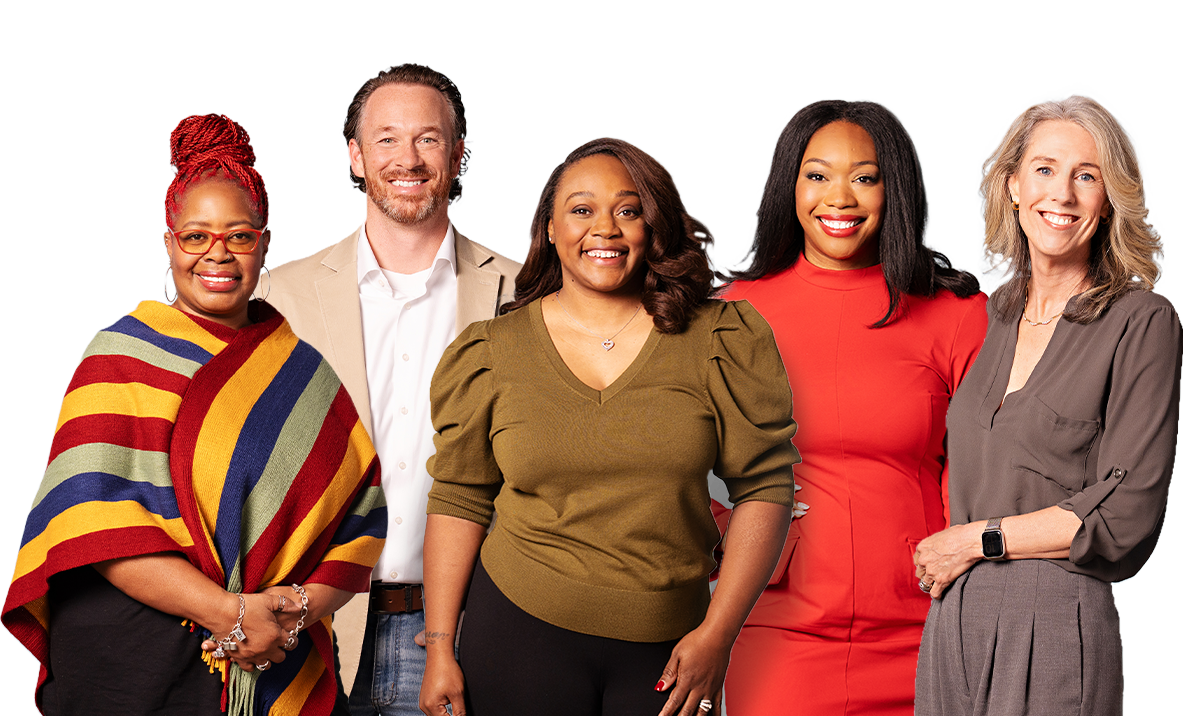
Across North Texas, big challenges demand bold thinking—and the innovators featured in this Q&A are answering that call.
They are entrepreneurs whose work is shaped by lived experience, creativity and a deep commitment to community. Their solutions aren’t theoretical. They’re already changing lives, strengthening neighborhoods and proving that some of the most powerful answers to our region’s toughest problems are being built right here at home.
Through United Way of Metropolitan Dallas’ Social Innovation Accelerator, these local change‑makers are refining their ideas, growing their reach and preparing to compete for game-changing prize funding during our biggest event of the year: The Pitch presented by Goldman Sachs and powered by PNC, held Wednesday, April 29 at Toyota Music Factory—one electrifying night where innovation, impact and community come together.
In this Q&A, you’ll meet the finalists behind this year’s biggest ideas, hear what drives their work and learn what’s possible when bold solutions are paired with real support.
Meet the Finalists for this Year’s Pitch

delmetria millener
As a teen, delmetria was frustrated that young writers didn’t receive the support that musicians and athletes do. She created #TeenWritersProject to equip teen writers with workshops, publishing opportunities and paid internships that help them write, publish and earn. Her organization works with about 60 teens a year and is looking to expand its impact in North Texas.

Dr. Christopher Hill
With limited access to fresh, nutritious food in Southern Dallas, some families travel up to four hours roundtrip to shop for groceries. Restorative Farms creates farms on unused tracks of urban land, improving food access and economic opportunities through training and employment in agriculture in underserved areas. Since 2017, they’ve distributed nearly 1 million servings of locally grown food.

Dr. Antoria Gillon
Dr. Gillon founded her organization to enable survivors of domestic violence to become self sufficient—through workforce development, housing and wraparound services—so they don’t have to return to abuse. More than 720 women have graduated Gillon’s program and are earning $44,300 on average annually.

Dejanae Parkman
Frustrated that conditions like endometriosis and polycystic ovary syndrome (PCOS) can take years to be diagnosed, Parkman developed the Dotted app as a proactive health tool for women. She plans to offer period tracking, education and access to trusted medical professionals to millions of women across the U.S.

Elizabeth Furrh
As a community volunteer, Furrh discovered that up to 45% of a nonprofit’s budget goes to feeding clients, even if that is not the organization’s primary support. She created Cooking for the Crowd to provide affordable, nutritious meals to nonprofits so they can focus resources on their core missions. Since then, they’ve served more than 28,000 meals to clients of 17 local nonprofits.
Get to Know Their Goals and Motivations
United Way: Tell us a bit more about what makes your organization unique.
Dejanae Parkman: My organization is a women’s health platform—an app that we call the first period care ecosystem—designed to decrease the seven- to 10-year diagnostic timeline for reproductive care. We call it an ecosystem because it provides not only education and medical access, but it also does accurate symptom tracking. This was needed because one in every 10 women will face some sort of reproductive diagnosis in their timeline—such as endometriosis, PCOS or fibroids. Having these conditions not only affects your quality of life but also increases your risk of cancers like ovarian and endometrial cancer. A lot of times these conditions aren’t spoken about until it’s too late. So that need for early intervention tools is prevalent at the start of a girl’s cycle and throughout her life.
Elizabeth Furrh: Cooking for the Crowd provides hot meal programs for other nonprofits, at a fraction of the cost, so they can focus on their core mission. For many small- and mid-sized service organizations, providing meals isn’t optional it’s essential to ensuring beneficiaries show up and can fully participate. They end up spending close to half their budget on that, and it sucks time and money away from what they set out to do. People coming in for skills for workforce development, to learn to read, speak English, etc. It’s a huge ask for these people, who are working very hard to improve their lives, to show up at a class after they’ve worked an eight- to 10-hour day. They get there, they haven’t eaten since 11 o’clock and now they’re supposed to do a two-hour class. It’s just one barrier too many. So, we take away this huge barrier, not only for the organizations we serve, but for the clients that they’re serving, and it has this ripple effect. They show up, they have a hot, healthy dinner, they have community time together, they switch gears, and then they are ready to learn. It’s just a complete shift.
delmetria millener: #TeenWritersProject is a literary ecosystem that guarantees high school teens can write, be published and get paid. We do this because writing is being erased. Teens aren’t writing anymore. Teachers aren’t teaching writing anymore. And it’s a critical creative skill that’s getting lost. I think teenagers are the voice of this generation and every generation. In years past, we had all kind of ways to express ourselves through writing as teenagers, which is why we have the bell hooks, the Maya Angelous, the Tony Morrisons and the James Baldwins. We don’t have that these days. Teenagers are not really writing. And I think it’s important to get back to that.
Dr. Antoria Gillon: From Ordinary to Extraordinary provides skills training to domestic violence survivors to help them become self-sufficient and thrive for themselves and their children. When survivors first come into our program, we teach them the skills that are needed for them to become equipped to start working right away in cosmetology, barbering or the medical field. Once they are finished with their program, they’re able to receive free working space at no cost, plus six months of housing that transitions into a one-year lease agreement into their own apartment that’s fully furnished. It’s especially important to create a safe space for survivors to be able to work and thrive. To start work without fully being equipped emotionally to be in the public right away is torture. Domestic violence survivors need a safe working space to be able to thrive at their own pace before going back into society.
Christopher Hill: Restorative Farms builds out regenerative urban farms that produce healthy, nutritious food. We simultaneously train and give a career pathway for individuals from disadvantaged communities or folks that were formerly incarcerated. For families in Southern Dallas, our urban farms are helping revitalize the community: We’re taking problem spaces that attract crime, illegal dumping and homeless encampments, and we’re turning them into productive assets. It also means that there’s jobs in close proximity to their homes, so logistically it’s easier for them to come to work or to get exposure to industries and organizations like ours. And then lastly, there’s access to food. Food deserts are very significant in North Texas and across the United States. There’s a good portion of our population that is not within a reasonable distance from a grocery store to provide their family with healthy food and nutrition. So rather than having to take transportation far away and taking hours of their time, they can walk to our farm and get a salad pack, and they have pride in the food that they’re purchasing because it’s coming from their community.
United Way: What inspired you to do this type of work?
Furrh: I was raised in a family that did a lot of helping, and so I think that was just normal for me. I have this desire to create an environment where people can thrive. I’ve found that cooking and community meals are huge shortcuts to providing an environment where people thrive, because food hits us really deeply. If you are fed, it expresses love almost immediately, and people feel respected and that they’re important. I’m passionate about this work because everyone has so much potential, and it takes a lot to tap into that. I’m trying to do my part to help everybody reach their potential.
Dr. Gillon: I wouldn’t say that I was passionate about starting this program. It came from a very dark place, seeing my father as the aggressor who belittled women. I also saw in shelters women going back to their abusers over and over again, and I couldn’t find out why. And it’s not easy to explain. Most of it is, because of the financial difficulty of standing on their own to provide for themselves and children. So they return back to what was comfortable or familiar for them and their children. I was inspired to start from Ordinary to Extraordinary because I witnessed firsthand that survivors were forced back into the workforce too soon, which caused a lot of anxiety and led to them returning to their abusers. I knew I had to provide skills for them to be able to work and not feel anxious around others, and to be able to find who they are.
millener: I started writing at a very young age, but no one trusted me as a teenager to publish me. It was something that I always wanted to do, but I didn’t know how and didn’t have anyone to coach me. I was hurt really bad when I was a teenager. I submitted a query letter to my favorite magazine at the time, and they accepted my pitch. They said they would publish my story, but they were going to give me a call to go over the details. When they called me, it didn’t go well. The woman said, “I’m sorry, we’ll have to rescind this offer because we don’t publish kids.” And she hung up. I didn’t have the language to advocate for myself, so I didn’t say anything to my parents. I was embarrassed and hurt. But then in the next issue, my story was published, word for word, and there was no compensation to me, no credit to me, and I was devastated. But it fueled my desire to prove myself as a writer.
Parkman: Not only do I have a personal connection with this, but I want to make sure that the next generation of girls doesn’t have to face being misdiagnosed or ignored until it’s too late. A tool like Dotted would have been amazing for my younger self. It would mean that I wouldn’t have to pass out in PE. It would mean that I wouldn’t have to silently cry in my car or think that something was innately wrong with me, and I wouldn’t feel like I was out of control of what was happening to me. If I had a tool like Dotted, not only would it have provided me with an earlier diagnosis, but I also wouldn’t have missed so much school. I wouldn’t have had to ask my parents for help to get money to continue to go to the doctor and my path in life might have looked different if I had access to a clinical tool like Dotted.
Hill: I’m an environmental engineer, and I’ve always appreciated sustainability and protecting the environment. And what Restorative Farms does in terms of building out regenerative farms is very much aligned with what I value and my background. Their mission really resonates with me because I personally have had issues related to the food that I consume, and my dad had some health issues at a very young age. It helped me realize how important it is for folks to have access to and knowledge about healthy foods and the produce available. Without access to healthy, nutritious food, we can’t become who we’re meant to be.
United Way: What has the Social Innovation Accelerator enabled your organization to do?
millener: The Social Innovator Accelerator has made it possible for me to turn my dream into a reality. And I know that sounds like a cliche, but it’s true. As an entrepreneur, it’s given me the tools and resources that I need to scale my business, to go forward. I thought I was pretty far along, but it showed me that I still have a long way to go—and it prepared me for it.
Furrh: [Before the program, we were] turning groups away, and the Accelerator has enabled us to start scaling very rapidly, which we’ve needed to do for a couple of years now. We now have a commercial kitchen, and we’ve been able to bring people on to help us grow and get a real plan in place.
Gillon: The Accelerator helped me gain access to new funding opportunities to be able to help more survivors throughout North Texas. I just got approval last month to accept the GI bill to help veterans and their spouses who are survivors. It also helped me to establish our entire platform of a website where survivors are able to see their appointments and see the client before doing the service.
Hill: The Accelerator enabled Restorative Farms to sharpen our vision, which is providing clarity for our future.
Parkman: The Social Innovation Accelerator enabled me to make my goal and dream come true. It enabled me to transform my business and push my mission even further than where I thought it would be. To affect the lives of thousands of girls in North Texas, to build this community and be a bridge between the medical community and the patients is something that I didn’t know if I were going to be able to achieve, and I’m really happy I did.
United Way: What’s next for your organization after The Pitch?
Hill: Immediately after The Pitch, we’re going to expand our network of regenerative farming assets within disadvantaged communities.
Parkman: After The Pitch, the Dotted app will be live throughout the entire U.S., and millions of women will have access to the accurate symptom tracking, our medical directory and our educational library.
millener: After The Pitch, we’ll increase our presence in DFW. Before the Accelerator, we were scattered all around the world with publishing teams, but I want to concentrate more locally. We’re going to contract with more high schools and youth centered organizations to create partnerships so that we can host writing workshops and publish teams that are more local.
Furrh: After The Pitch, Cooking for the Crowd will continue to scale. We’re preparing to double our meals, to 14,000 meals this year. And I think we’ll be doubling our meals every year from now on, until we max out the kitchen we’re in. Then we plan on going to other cities because this is needed everywhere. This style of program is really nonexistent.
Gillon: Can I say hopefully we win? If we win The Pitch, it will give us the opportunity to be able to provide more opportunities for survivors right here in North Texas by not only teaching them but equipping them with the skills that’s needed to become self-sufficient.
Join Us at The Pitch and Be Part of the Future of Innovation
Reading the stories of these innovators is inspiring—but seeing them pitch live will be unforgettable.
On Wednesday, April 29, these five Social Innovation Accelerator finalists will take the stage at The Pitch, competing for $270,000 in game‑changing funding and the title of Social Innovator of the Year. You’ll hear firsthand how their ideas are transforming education, income and health across North Texas—and you’ll play a role in shaping what happens next by voting for the Audience Choice Award.
This isn’t just an event. It’s a chance for change-makers like you to champion local solutions, connect with fellow community leaders and witness the future of social innovation unfold in real time. Plus, every ticket sale directly supports our programs that improve access to education, income and health, which benefit more than 1.7 million North Texans every year.
Seats are limited, and momentum is building. Reserve your spot now and be part of a night where bold ideas meet the power to change our community. Your $50 ticket includes an open bar, tasty bites, parking, networking and more—all while supporting our social innovation programming right here in North Texas.
Tags

See Innovation in Action
Join us at The Pitch on Wednesday, April 29 and experience the bold solutions that are changing North Texas for the better. Enjoy thrilling competition, delicious food and drink, and engaging networking with fellow change-seekers from across our community.


